Electric fence vs tension fence vs vibration fibre: which layer belongs on your wall?
Pulse fences measure a 3–10 kV circuit, tension fences measure 100–450 N of wire load, and vibration fibre locates a disturbance to about ±1 m. Choose pulse for rigid walls, tension where voltage is not allowed, and fibre for long, unpowered or electrically noisy boundaries; zone length stays 80–200 m.
Most perimeter projects start with a product name: “we need an electric fence”. The product name hides the real decision, which is which physical quantity the site can reliably measure. Pulse, tension and vibration fibre all sit on a fence, but they measure different things and fail for different reasons.
This note compares the three principles as layers, not as competing catalogue items. The goal is to help you ask the right question before a supplier answers with a datasheet.
What does each technology actually measure?
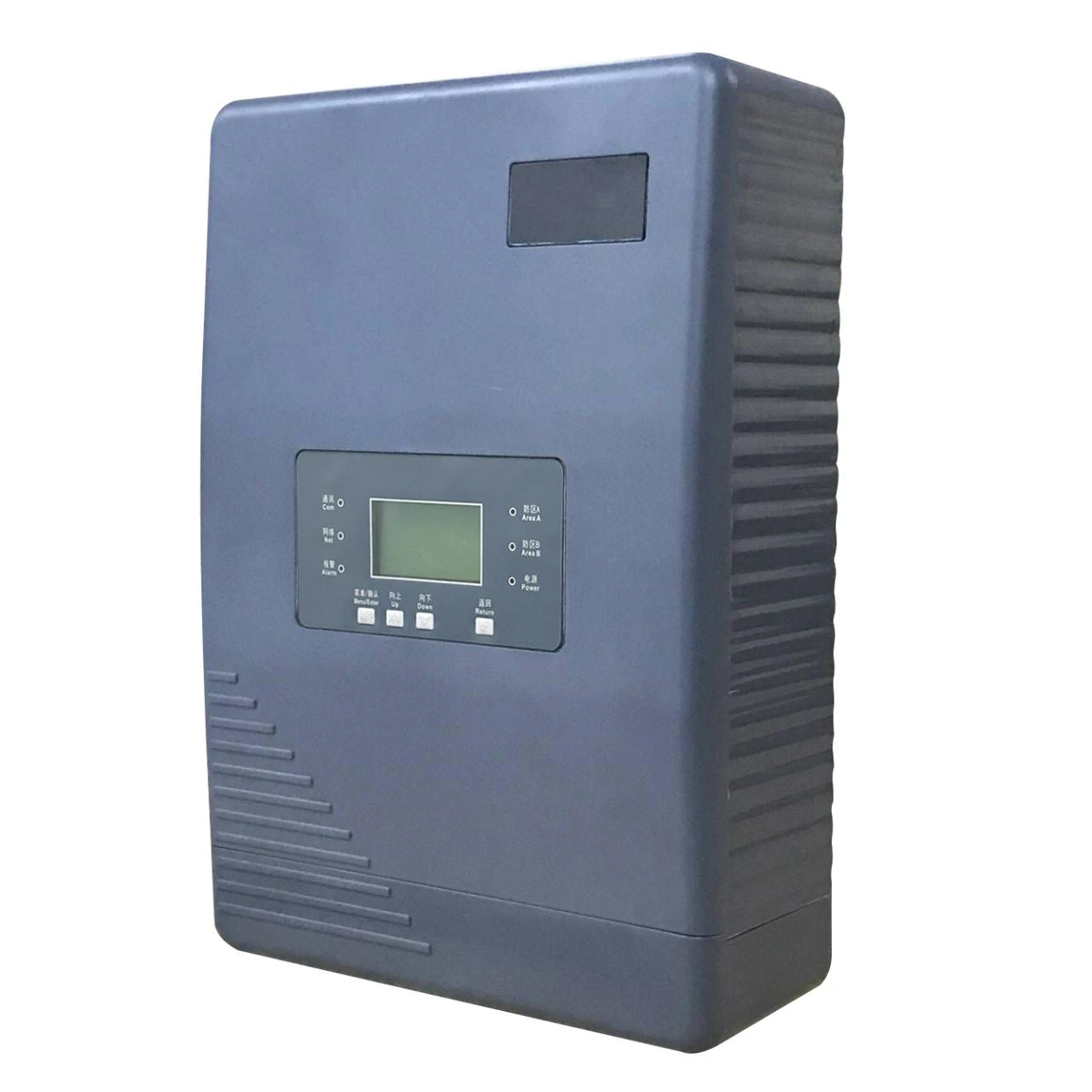
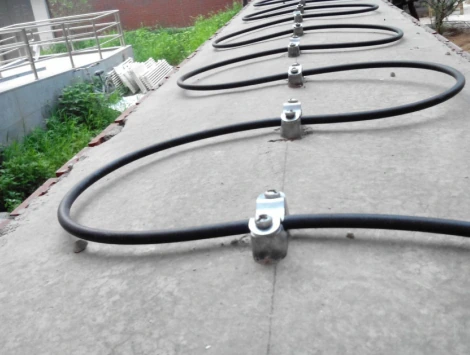
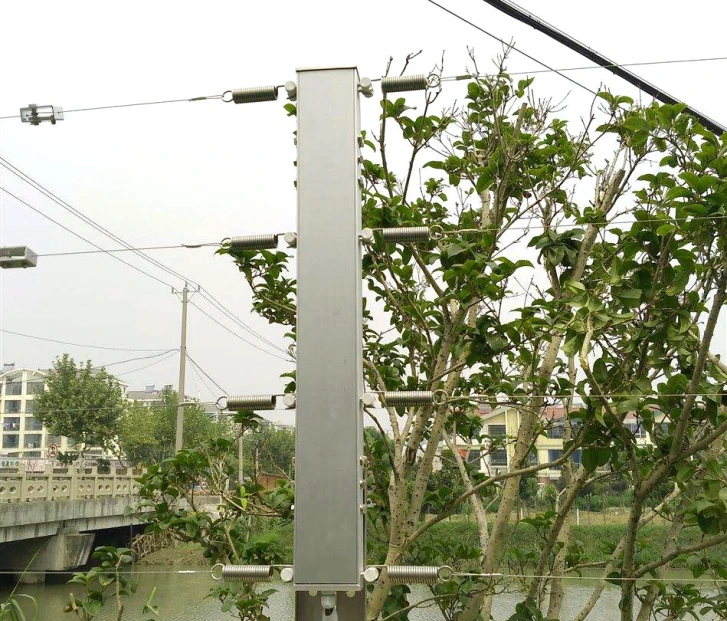
A pulse fence measures an electrical circuit. The host sends a short high-voltage pulse along alloy wires; a cut, a short between two wires or a tampered wiring panel changes the circuit. A tension fence measures mechanical load: climbing, lifting or cutting changes the strain on a wire connected to a load cell. Vibration fibre measures the interference pattern of light in a glass fibre bonded to the fence.
The distinction matters because each principle is blind to a different failure. A pulse fence cannot tell whether the short came from a climber or a fallen branch. A tension fence cannot see a clean cut that leaves the remaining wires at the same tension. Fibre can hear a cut, but it also hears wind, rain and a loose panel.
| Criterion | Pulse fence | Tension fence | Vibration fibre |
|---|---|---|---|
| Measured quantity | Electrical circuit | Mechanical tension | Optical interference |
| Voltage at the fence | 3–10 kV pulse | None | None |
| Typical zone | 80–200 m | 80–200 m | Zone or position |
| Main nuisance source | Vegetation, arcing, animal contact | Wind, thermal movement, loose posts | Wind, rain, loose panels |
| Power along the fence | Host per zone | Host per zone | None (fibre passive) |
Which one suits a masonry wall?
A masonry wall is rigid, so all three principles can work. Pulse is the usual choice because it combines a visible barrier with a clear electrical alarm, and the wall provides a stable mounting surface. Tension is the better answer when the site does not want voltage on the fence, for example a wall beside a public footpath or a fuel facility. Fibre is justified when the wall is long and the owner wants to avoid powered nodes along it.
The wall condition still decides. A wall with loose coping, frequent repairs or climbing plants is a poor host for any sensor until the mechanical issues are fixed. Sensors report the wall’s movement as faithfully as they report an intruder.
When is fibre worth the extra cost?
Fibre becomes competitive when the perimeter is long, power is scarce, or electromagnetic interference is high. On a 2 km boundary, the cost of power drops, conduit and surge protection for dozens of copper hosts can approach the cost of a fibre processor. On a substation or beside a railway, fibre removes the electrical question entirely.
The trade-off is commissioning discipline. Fibre needs clean splice trays, documented routes and a calibration walk. A poorly installed fibre system produces beautiful data that nobody trusts. If the project cannot fund a proper commissioning walk, choose a simpler layer.
What causes false alarms in each system?
For pulse, the usual causes are vegetation touching the wires, a damaged insulator, a metal object within 30 mm of the alloy wire, or a poor earth that lets the pulse find another path. For tension, it is wind on a loose panel, thermal movement on a long span, or a post that has started to move. For fibre, it is wind, rain, loose cladding and mechanical work near the fence.
None of these is solved by lowering sensitivity first. Lowering sensitivity hides the real event along with the nuisance. Fix the mechanical cause, then tune. A fence that rattles in wind will never be quiet at a sensitivity that still catches a climber.
How do you test each layer before handover?
Pulse: test open circuit and short circuit at the far end of every zone, not at the host. Tension: pull at mid-span, cut the farthest wire, and record the threshold. Fibre: walk the full route, simulate a climb at three points, and confirm the reported zone or position matches the map.
Record the test result for each zone with a time and a name. A handover file that says “tested” without values is not a commissioning record; it is a hope.
Which should you choose first?
Start with the barrier: what is the wall or fence made of, and how stable is it? Then the response: who goes to the alarm, and how far can they travel? Then the environment: power, network, vegetation, salt, lightning. Only then choose the principle. If the site needs deterrence, pulse. If it forbids voltage, tension. If it is long, unpowered or electrically noisy, fibre.
It is normal for a serious perimeter to use two of the three, with the second layer covering the first layer’s blind spot. The mistake is not mixing technologies; it is mixing them without a zone map and a response procedure.