
Electric fence wire & accessories
Electric fence wire, insulators and tensioners — the parts that decide year five.
- Series / models
- Posts, insulators, alloy wire, tensioners, grounding
- Detection
- Mechanical and electrical support parts
- Typical range
- Terminal ≤100 m; bearing 20–25 m; middle 4–5 m
- Control
- —
Electric fence wire & accessories
| Insulator | > 15 kV |
|---|---|
| Wire | φ0.66 × 7 |
| Earth | < 10 Ω |
| Fasteners | SUS304 |
Electric fence wire, insulators and tensioners — the parts that decide year five.
Three post classes
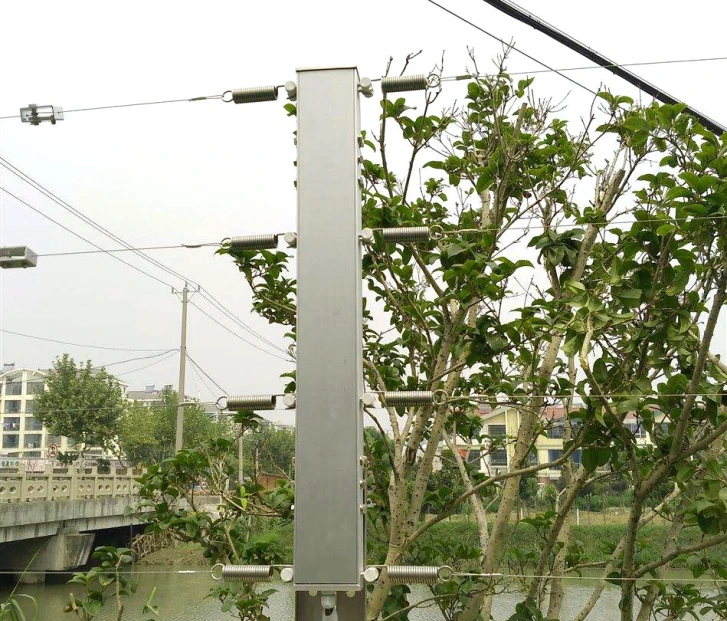
Terminal posts take the tension at corners and zone ends; bearing posts carry long spans; intermediate posts hold the wire spacing every 4–5 m.
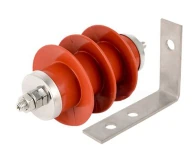
Insulators above 15 kV
ABS engineering plastic insulators withstand more than 15 kV, resist oxidation and corrosion, and are fixed with stainless clips.
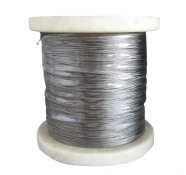
Mg-Al alloy wire
Seven-strand φ0.66 mm magnesium-aluminium wire resists oxidation and corrosion while keeping conductivity low enough for pulse detection.
Tension and adjustment
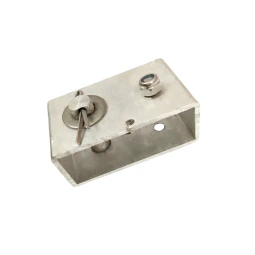
Tensioners, springs and turnbuckles keep parallel wires at equal tension and leave room for thermal expansion.
Grounding and lightning
High-voltage arresters, copper bonding conductors and a dedicated earth electrode below 10 Ω complete the electrical protection.
From principle to site
Values are typical manufacturer data. Site conditions, power supply and configuration can change the final specification.
The bill of materials decides the maintenance bill
Most fence faults are mechanical: a loose terminal post, a corroded tensioner, an insulator cracked by UV, a wire that has stretched until it touches a metal bracket. Specifying the full accessory set — posts, insulators, springs, tensioners, grounding — is cheaper than replacing a host damaged by arcing.
Keep the same alloy wire and insulator type across the site. Mixing materials creates galvanic corrosion at the joints and makes the tension behaviour unpredictable. On coastal sites, specify stainless hardware and inspect the first 50 m after the rainy season.
Grounding is not optional
Each zone needs one or two high-voltage arresters near the host and a dedicated earth electrode. Bond the arrester common terminal to the electrode with 6–16 mm² copper and measure the resistance; below 10 Ω is the working target. Do not bond the fence earth to the building lightning protection system without a designer’s approval.
After a nearby strike, inspect the arresters and repeat the earth resistance test. A fence that “still works” after a storm may have lost its protection path and will fail on the next event.
Technical specifications
Values are typical manufacturer data. Site conditions, power supply and configuration can change the final specification.
| Terminal post | Φ32 × 2.0 × 850 mm aluminium alloy shaped tube |
|---|---|
| Bearing post | Φ21.5 mm aluminium alloy or galvanized pipe |
| Intermediate post spacing | 4–5 m |
| Bearing post spacing | 20–25 m |
| Terminal post spacing | ≤ 100 m |
| Insulator withstand | > 15 kV |
| Insulator material | ABS engineering plastic |
| Alloy wire | φ0.66 mm × 7 strands, Mg-Al |
| High-voltage lead | Double insulated, oxidation and corrosion resistant |
| Fasteners | SUS304 stainless steel |
| Warning signs | Every 10 m on the visible fence line |
| Lightning arrester | 1–2 per zone; earth resistance < 10 Ω |
| Earth conductor | 6–16 mm² copper |
| Minimum metal clearance | 30 mm from alloy wire to other metal |
Where this system is usually specified
Electric fence for homes & villas
A perimeter that a resident can live beside and a guard can actually reach.
View detailsElectric fence for warehouses & factories
Long perimeters, vehicle yards and the places a fence quietly stops working.
View detailsPower & water utilities
Unattended sites where the alarm must be true the first time.
View detailsFarms, ranches & orchards
Contain the herd, protect the crop, and keep the power bill at zero.
View detailsBuyer questions
Can I buy only the electronics and use local posts?
Yes, provided the post strength, insulator withstand and spacing match the design. The electronics assume a specific wire tension and insulation level; undersized posts or low-grade insulators will produce false alarms and arcing that no host setting can fix.
What is the service life of the alloy wire?
It depends on the environment. The wire is oxidation- and corrosion-resistant, but coastal salt, industrial pollution and repeated mechanical damage shorten its life. Inspect for broken strands and replace damaged sections rather than twisting them together.
How do I test the earth resistance?
Use a three-point earth tester with the fence disconnected, following the instrument’s spacing instructions. Record the value and the date. If the reading is above 10 Ω, add an earth rod or improve the soil moisture rather than increasing the wire gauge.
Are the small accessory photos to scale?
No. Product photos show shape and finish, not dimensions. Use the specification table and the installation drawing for sizing; the images are for identification only.
Systems that work alongside it
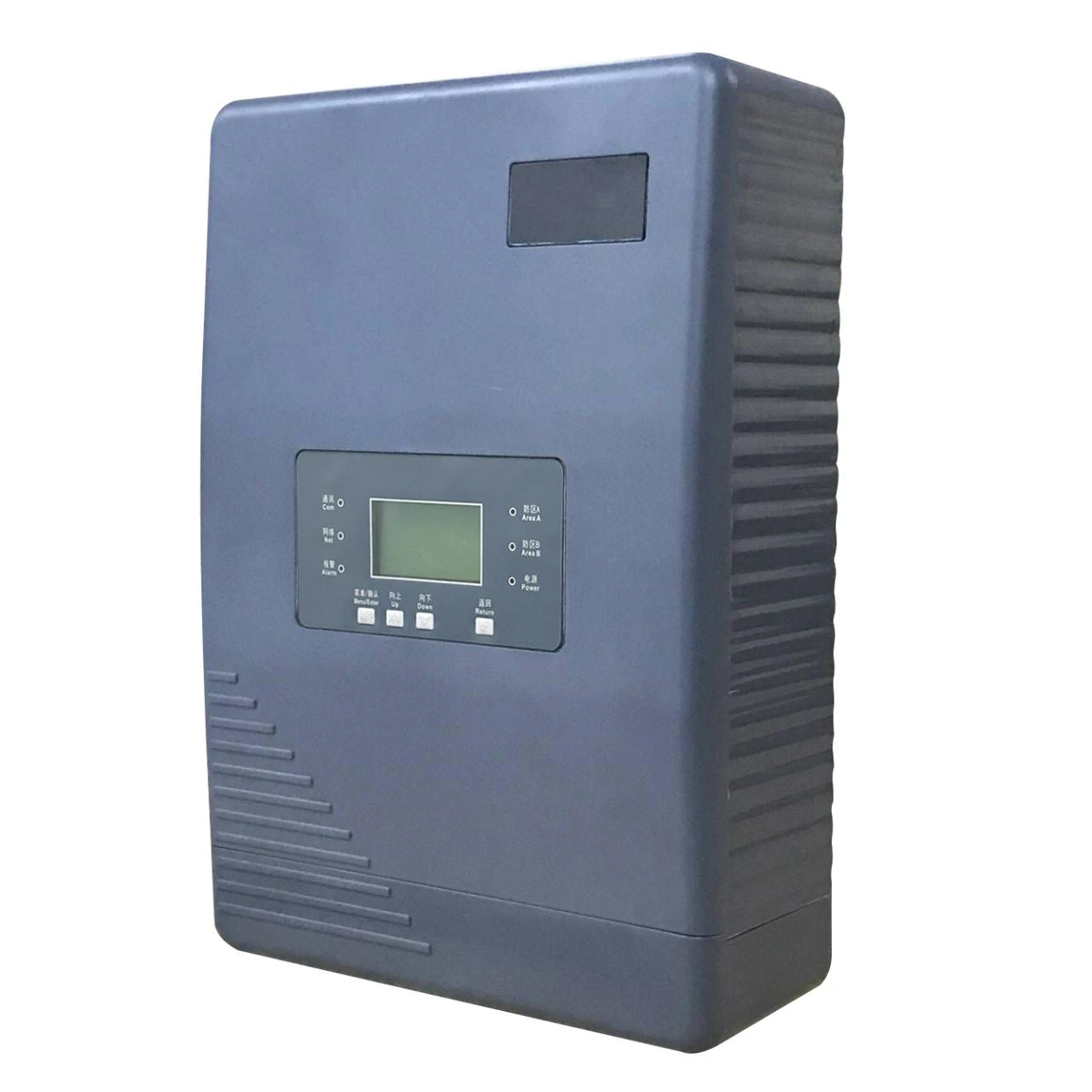
Electric fence energizer system
Fence detection · X3 / X5 / X6 series
5,000–10,000 V bi-polar pulse, one pulse per second, ≤2.5 J.
Tension fence
Fence detection · S7W / S9 / X800 / X900
Detects climbing, cutting and slackening without voltage on the fence.
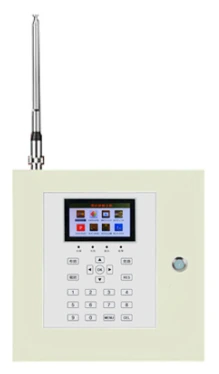
Electric fence alarm & control
Electric fence alarm · K7 / K9 / K10 hosts · touch terminal · management software
Arm, map and verify every electric fence zone from one interface.
Specify this system for your perimeter
Send the perimeter length, fence or wall type and the response requirement. We will return a zone plan and a configuration.