
Vibration fibre
A sensing cable that hears climbing, cutting and digging along the whole run.
- Series / models
- 1/2-zone collector · 4/8/16-channel chassis · locating unit
- Detection
- Fibre-optic vibration / interferometer
- Typical range
- Up to 120 km with locating processor
- Control
- Network / dry contacts
Vibration fibre
| Principle | Fibre interferometer |
|---|---|
| Channels | 1 / 2 / 4 / 8 / 16 |
| Locating | ±1 m ≤10 km |
| Range | Up to 120 km |
A sensing cable that hears climbing, cutting and digging along the whole run.
Fibre interferometer
Vibration on the sensing cable changes the interference pattern of light in the fibre; the processor converts that change into a calibrated alarm.
Passive at the perimeter
The fence side carries no electricity, which removes spark and shock risk and makes the sensor suitable for chemical, fuel and explosive-risk sites.
Zone or locating
Zone collectors report which cable segment alarmed; the locating processor reports position along the fibre, with accuracy that depends on distance.
Immune to electrical noise
Light in glass is not affected by nearby power cables, transformers or radio equipment, a practical advantage on substations and industrial sites.
Multi-level sensitivity
Sensitivity is set per zone so a rigid wall and a flexible mesh fence can share one processor without compromising either.
Splice tray inside
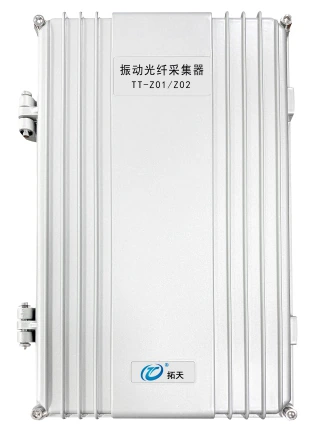
The collector includes a splice tray, so field terminations are made inside the enclosure rather than in a separate box.
From principle to site
Values are typical manufacturer data. Site conditions, power supply and configuration can change the final specification.
Zone collector or locating processor?
A zone collector answers “which cable segment was disturbed”. It is the economical choice for a fence divided into short zones, and it integrates with a K-series host or the management platform over the network. A locating processor answers “where along the fibre”, which matters on long linear assets such as pipelines, airport boundaries and perimeter roads where a guard cannot search the whole run.
Position accuracy is not constant. The published figures move from ±1 m within 10 km to ±20 m at 40–60 km. Do not quote the best figure without the distance; a specification that says “±1 m” for a 40 km pipeline is misleading.
Making the cable hear the fence
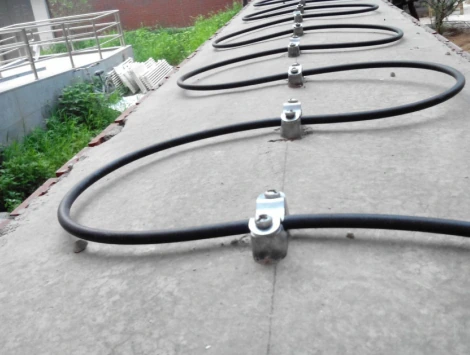
The sensing cable must be mechanically coupled to the fence without being over-tensioned. On mesh fences, run the cable along the fabric with a loose, regular tie pattern; on rigid walls, use a surface conduit or a clamp every 30–50 cm. A cable that touches only every few metres will miss a light cut.
Separate the sensing fibre from the lead-in fibre. The lead-in should be in a steel conduit or a protected route, otherwise a cut in the wrong place looks like a fence alarm. Record the fibre length, splice positions and zone boundaries so the locating processor can be calibrated against the real route.
Technical specifications
Values are typical manufacturer data. Site conditions, power supply and configuration can change the final specification.
| Model range | 1/2-zone collector; 4/8/16-channel chassis; locating processor |
|---|---|
| Principle | Fibre-optic interferometer |
| Fibre interface | FC/APC |
| Alarm types | Vibration, fibre break, tamper |
| Response time | ≤ 3 s (locating processor) |
| Frequency response | 1–20 kHz (locating processor) |
| Distance | 10 / 20 / 40 / 60 / 80 / 120 km options |
| Position accuracy | ≤10 km: ±1 m; 10–20 km: ±2 m; 20–30 km: ±5 m; 30–40 km: ±10 m; 40–60 km: ±20 m |
| Display | 2.5 in |
| Communication | Network |
| Power supply | DC12 V 2 A (collector); AC110–220 V (chassis) |
| Consumption | 5 W (collector); 8 W (chassis); 80 W (locating processor) |
| Operating temperature | −40 °C to +50 °C (collector); −40 °C to +70 °C (locating processor) |
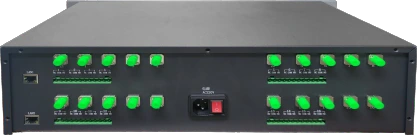
| Housing | Cast aluminium (collector); 2U / 4U brushed aluminium (chassis) |
| Alarm output | Dry NO/NC contact; 12 V siren output |
Where this system is usually specified
Airports & borders
Kilometres of boundary, one map, and a response that can find the point.
View detailsPower & water utilities
Unattended sites where the alarm must be true the first time.
View detailsOil, gas & hazardous areas
Detection that is certified for the zone it stands in.
View detailsElectric fence for prisons & correctional facilities
Layers that assume the first one will be tested.
View detailsBuyer questions
What is the difference between vibration fibre and a fence sensor?
A fence sensor is mounted on a specific structure and detects movement of that structure. Vibration fibre uses the fence or ground as a continuous sensing medium: the whole cable is the sensor, so there are no electronic nodes along the perimeter and no power at the fence.
Can it locate the alarm point?
The locating processor can, with accuracy that depends on distance: about ±1 m within 10 km, ±2 m at 10–20 km, ±5 m at 20–30 km, ±10 m at 30–40 km and ±20 m at 40–60 km. Zone collectors report the zone, not the metre.
Does rain or wind cause false alarms?
Heavy rain, hail and strong wind produce real vibration. The processor filters by frequency and duration, and the zone sensitivity is tuned on site. A fence that rattles loosely in wind will always be harder to tune than a rigid one; fix the mechanical noise before adjusting the electronics.
How is the fibre repaired after a cut?
The break is located by the processor or a OTDR, the damaged section is replaced with a fusion splice in a protected enclosure, and the zone is re-commissioned. Keep spare cable and a splice kit on site for long perimeters.
Systems that work alongside it
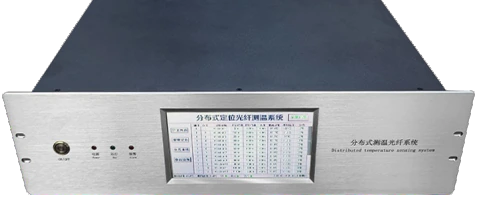
Distributed temperature fibre
Covert detection · DTS processor, 1–8 channels
Continuous temperature along the cable, not at a few points.
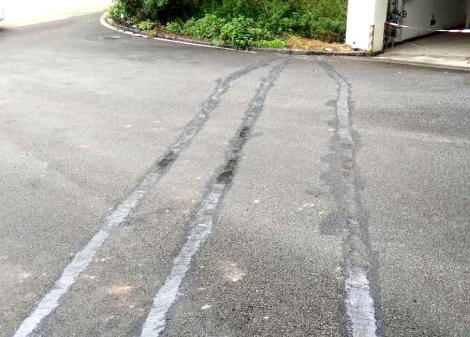
Buried leakage cable
Covert detection · Leakage cable detector set
A detection line you cannot see, following the ground you already have.
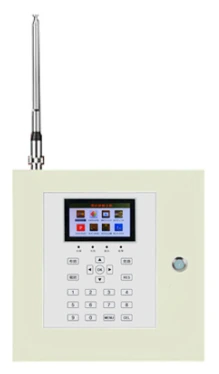
Electric fence alarm & control
Electric fence alarm · K7 / K9 / K10 hosts · touch terminal · management software
Arm, map and verify every electric fence zone from one interface.
Specify this system for your perimeter
Send the perimeter length, fence or wall type and the response requirement. We will return a zone plan and a configuration.