
Laser barrier
A narrow beam that holds its line for hundreds of metres.
- Series / models
- 1–8 beam laser detectors
- Detection
- Laser beam interruption
- Typical range
- 1–500 m
- Control
- Dry contacts
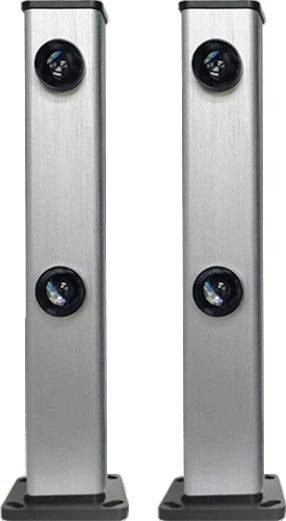
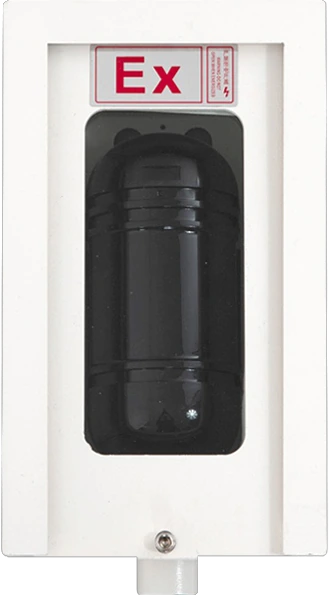
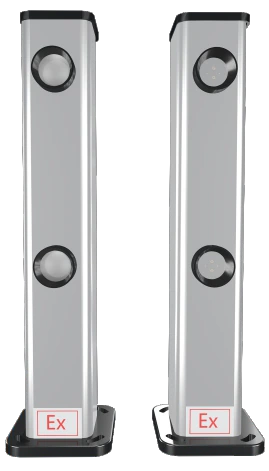
Laser barrier
| Range | 1–500 m |
|---|---|
| Beams | 1–8 |
| Response | 25–300 ms |
| Rating | IP66 |
A narrow beam that holds its line for hundreds of metres.
Long, narrow beam
A laser spot stays small over distance, so the receiver needs less gain and the detection line is less affected by stray light than an infrared beam.
One to eight beams
Single-beam units protect a line; four- and eight-beam columns create a curtain that is harder to step through or crawl under.
25–300 ms response
The response time is selectable, so a fast crossing and a slow object can be separated by timing rather than by sensitivity alone.
IP66 aluminium housing
The aluminium enclosure and sealed optics are rated IP66 for outdoor use, with an operating range of −40 °C to +60 °C.
±30° alignment
Horizontal and vertical adjustment of ±30° makes it practical to align across uneven ground and long spans.
From principle to site
Values are typical manufacturer data. Site conditions, power supply and configuration can change the final specification.
Where a laser barrier earns its cost
Laser barriers are strongest where the perimeter is straight, open and long: airport edges, pipeline corridors, substation fences, railway compounds. The narrow beam keeps the detection line tight, and multi-beam columns create a curtain that a person cannot step over without interrupting at least one beam.
They are weaker where the ground moves, where vehicles or animals regularly cross, and where fog, dust or heavy rain persists. In those conditions, a laser may still work but the maintenance burden rises; combine it with a fence-mounted or buried layer rather than relying on the beam alone.
Alignment and false-alarm control
Align the transmitter and receiver with the visible red beam first, then switch to the operating wavelength and fine-tune with the signal strength indicator. Tighten the mounts only after the signal peaks; a mount that moves after tightening will drift out of alignment in the first storm.
Set the response time to match the threat. A 25 ms response catches a fast crossing but also reacts to birds and debris; 100–300 ms is more forgiving on exposed sites. Test with a walking and a crawling target at the far end, not only at the near end.
Technical specifications
Values are typical manufacturer data. Site conditions, power supply and configuration can change the final specification.
| Wavelength | 808 nm / 650 nm |
|---|---|
| Beams | 1, 2, 3, 4, 6 or 8 |
| Range | 1–500 m |
| Detection mode | Beam interruption |
| Response time | 25 / 50 / 100 / 200 / 300 ms selectable |
| Alarm duration | 3 / 30 / 45 / 60 s (customisable) |
| Laser class | Class I eye-safe |
| Power supply | DC12–24 V |
| Consumption | Receiver 6 W; transmitter 8 W |
| Alignment | Horizontal ±30°; vertical ±30° |
| Operating temperature | −40 °C to +60 °C |
| Protection | IP66 |
| Material | Aluminium alloy |
| Alarm output | Dry NO/NC contact |
| Dimensions | 69 × 69 × 229 mm (1 beam) to 69 × 69 × 1,489 mm (8 beams) |
Where this system is usually specified
Airports & borders
Kilometres of boundary, one map, and a response that can find the point.
View detailsElectric fence for prisons & correctional facilities
Layers that assume the first one will be tested.
View detailsPower & water utilities
Unattended sites where the alarm must be true the first time.
View detailsElectric fence for warehouses & factories
Long perimeters, vehicle yards and the places a fence quietly stops working.
View detailsBuyer questions
Is the laser safe for eyes?
The barrier uses a Class I eye-safe laser source. Class I is safe under normal use without protective eyewear, but do not stare into the transmitter or modify the optics. Installation and service should still follow the site’s laser safety procedure.
How far can the beam go in rain or fog?
The published range is 1–500 m under clear conditions. Rain, fog and dust scatter the beam and reduce the usable margin, especially at the top of the range. For an exposed coastal or mountainous site, specify a shorter span or add a second detection layer.
Can it be mounted on a wall?
Yes, with brackets that allow horizontal and vertical adjustment. The wall must be stable; a wall that moves with temperature or traffic will misalign the beam. On long runs, use independent posts rather than wall brackets at both ends.
How many beams should I choose?
One or two beams protect a line and are enough where the goal is detection of crossing. Four or eight beams create a curtain that also catches crawling and limits the gap a person can slip through. More beams mean more alignment work and a taller, more visible column.
Systems that work alongside it
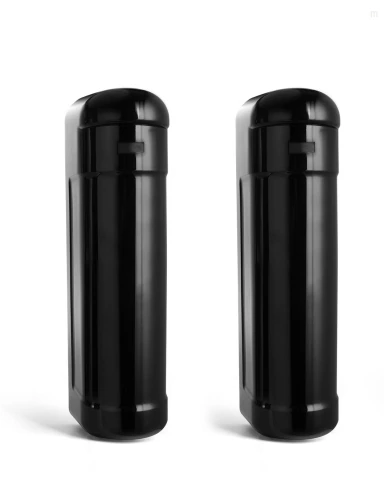
Infrared barrier
Beam detection · 2 / 3 / 4-beam active infrared
The economical beam layer for short and medium spans.
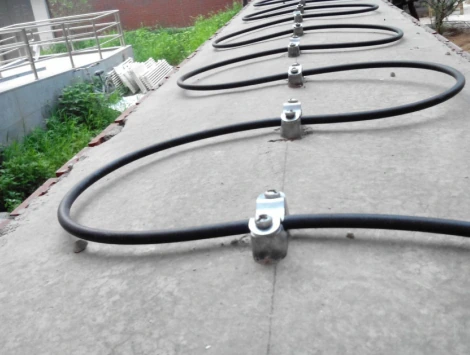
Vibration fibre
Covert detection · 1/2-zone collector · 4/8/16-channel chassis · locating unit
A sensing cable that hears climbing, cutting and digging along the whole run.
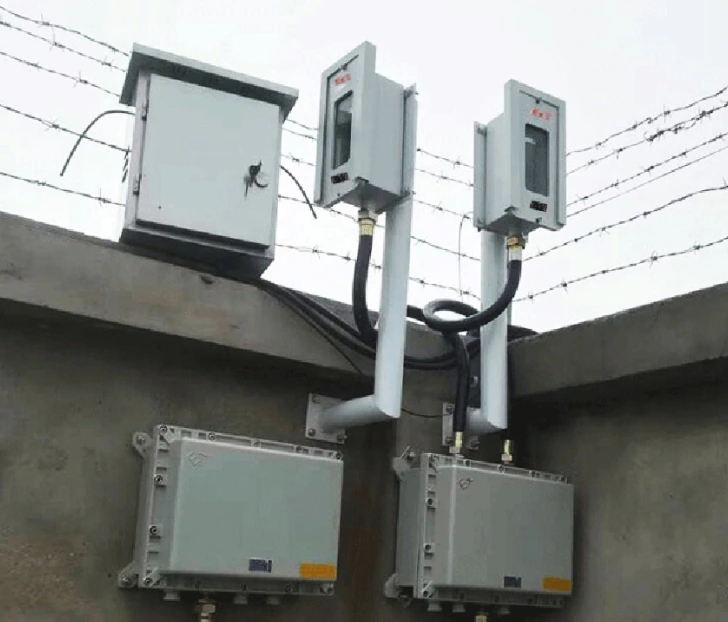
Explosion-proof perimeter alarm
Hazardous area · Ex d IIB T6 Gb / Ex ib IIC T6 detector family
Detection and alarm inside the hazardous area, not at its edge.
Specify this system for your perimeter
Send the perimeter length, fence or wall type and the response requirement. We will return a zone plan and a configuration.