
High-voltage pulse grid
Visible deterrence for boundaries that must not be crossed.
- Series / models
- Grid energizer and control keyboard
- Detection
- High-voltage pulse on a visible grid
- Typical range
- Wall-top or post-mounted runs by layout
- Control
- Keypad / RS485 / network
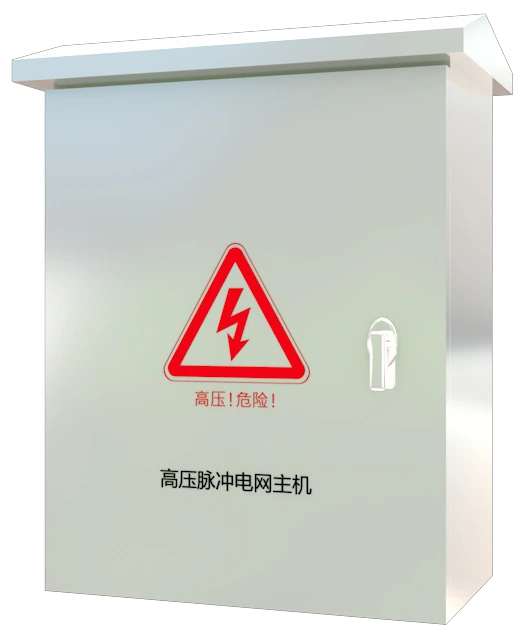
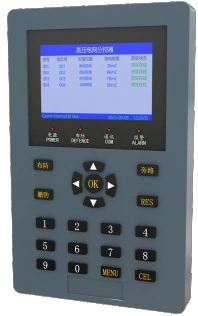
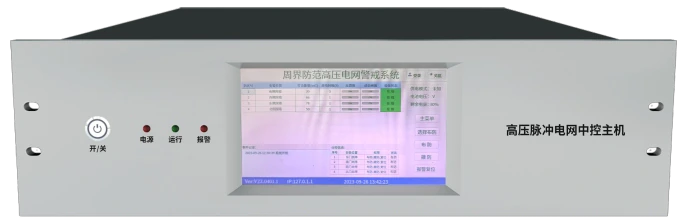
High-voltage pulse grid
| Output | 4.5–10 kV |
|---|---|
| Control | Keypad + remote |
| Alarm | NO/NC relay |
| Backup | DC12 V |
Visible deterrence for boundaries that must not be crossed.
High-voltage output
A pulse output in the 4.5–10 kV class makes contact with the grid an unmistakable event, while the short pulse duration limits energy.
Local and remote arming
Arm and disarm from the keypad, a remote control or the control host; the keypad shows zone and voltage status.
Tamper and fault reporting
Enclosure opening, output fault and power loss are reported separately from an intrusion alarm.
Warning signage
Warning plates are fixed every 10 m on the visible fence line, with the voltage class and emergency contact space.
Steel enclosure
The host is housed in a lockable powder-coated steel cabinet, sized for the terminal wiring and a backup battery.
From principle to site
Values are typical manufacturer data. Site conditions, power supply and configuration can change the final specification.
Where a pulse grid is the right layer
A pulse grid is used where the fence itself must be a visible, physical obstacle: prison walls, substations, fuel depots, military or government compounds. It is not a covert sensor. Its value is the combination of a strong physical barrier and an unmistakable electrical deterrent, backed by signage and a documented response procedure.
Because the output is high voltage, the installation must be treated as electrical work. The grid is isolated before any maintenance, the earth electrode is separate from the building earth, and the host is placed where only authorised staff can reach it.
Design sequence for a grid boundary
First confirm the wall height and the distance to public roads. The grid is mounted above the wall or on dedicated posts, with the lowest live wire out of reach from the public side. Then divide the boundary into zones that match the response routes, and place the keypad and host inside the secure area.
The high-voltage lead should run in its own conduit, separated from communication and low-voltage wiring. Warning plates go every 10 m, and the commissioning record should include a pulse test at the farthest point of each zone, not only at the host.
Technical specifications
Values are typical manufacturer data. Site conditions, power supply and configuration can change the final specification.
| Output voltage | 4,500–10,000 V pulse (model dependent) |
|---|---|
| Wiring | 4 or 6 wires; single or dual zone |
| Pulse duration | ≤ 0.1 s |
| Pulse current | ≤ 10 A peak |
| Alarm duration | 10–9,990 s adjustable |
| Control | Keypad, remote control, RS485, network |
| Alarm output | Dry NO/NC relay; DC12 V siren |
| Power supply | AC110–220 V; DC12 V backup |
| Consumption | ≤ 15 W |
| Operating temperature | −40 °C to +50 °C |
| Enclosure | Powder-coated steel cabinet, lockable |
| Installation | Wall or post mounting, out of public reach |
Where this system is usually specified
Electric fence for prisons & correctional facilities
Layers that assume the first one will be tested.
View detailsPower & water utilities
Unattended sites where the alarm must be true the first time.
View detailsElectric fence for warehouses & factories
Long perimeters, vehicle yards and the places a fence quietly stops working.
View detailsOil, gas & hazardous areas
Detection that is certified for the zone it stands in.
View detailsBuyer questions
Is a pulse grid the same as an electric fence?
They share the pulse principle but differ in purpose and mounting. An electric fence is usually a lightweight wire fence on posts along a boundary; a pulse grid is a heavier, visible grid on a wall or dedicated frame, used where deterrence and physical resistance matter more than concealment.
Can the grid be connected to the same control platform as other sensors?
Yes, through RS485, network or dry contacts, provided the platform supports the host protocol. Keep the grid on its own zone addresses and label the zones physically; mixing grid and fence zones on one address makes alarm confirmation ambiguous.
What maintenance does a high-voltage grid need?
Inspect insulators and wire tension after storms, clear vegetation that reduces clearance, test the pulse at the far end of each zone, and check the earth resistance annually. Any sign of arcing on the wall or posts should be investigated before it damages the host.
Can it be installed on an existing wall?
Usually yes, with wall-top brackets or chemical anchors, but the wall must carry the wind load and the posts must be bonded to the structure. On weak or hollow walls, use dedicated posts set into the ground instead of relying on the wall.
Systems that work alongside it
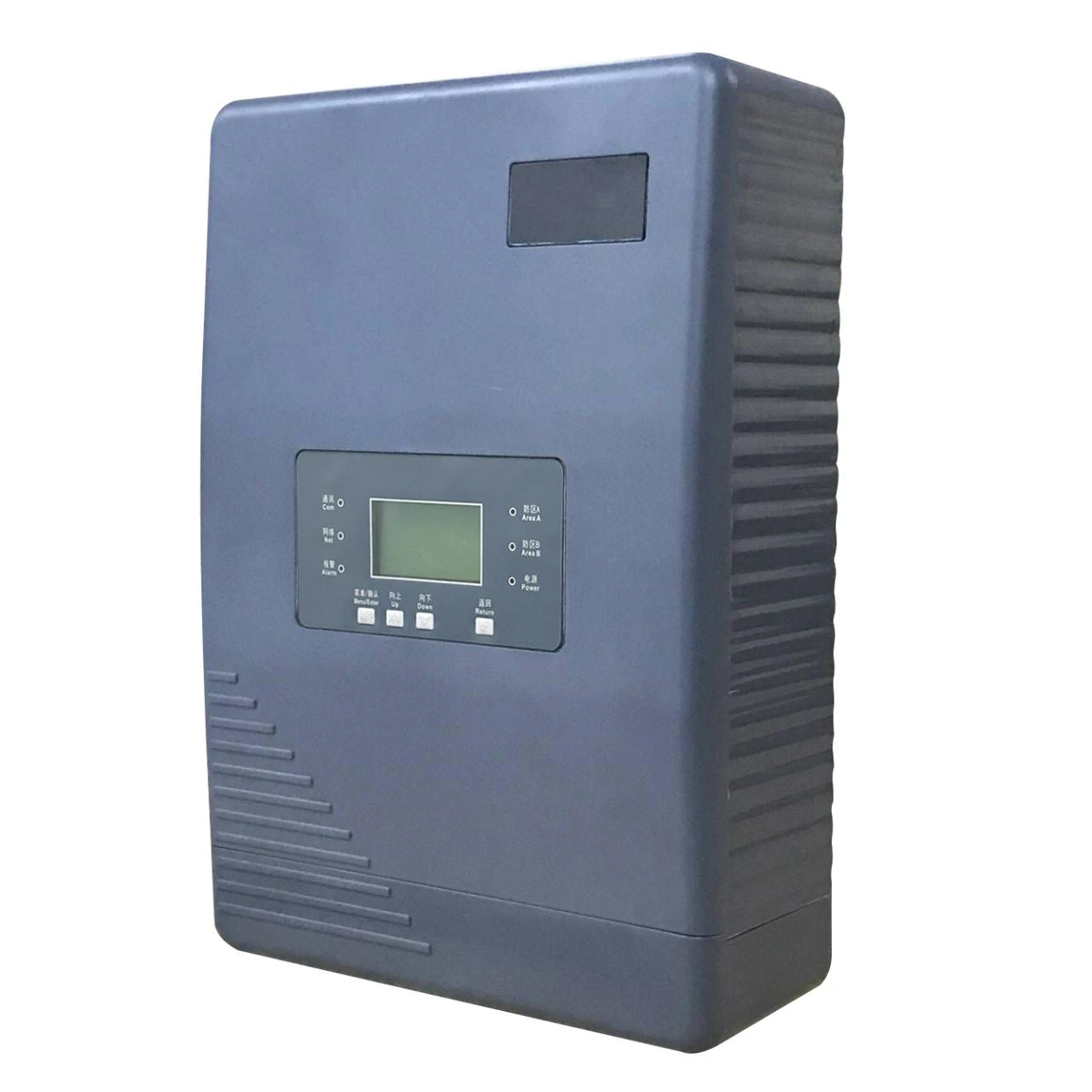
Electric fence energizer system
Fence detection · X3 / X5 / X6 series
5,000–10,000 V bi-polar pulse, one pulse per second, ≤2.5 J.
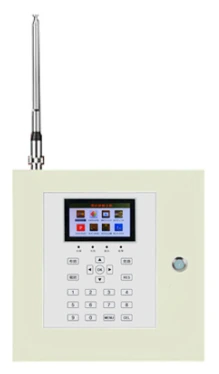
Electric fence alarm & control
Electric fence alarm · K7 / K9 / K10 hosts · touch terminal · management software
Arm, map and verify every electric fence zone from one interface.
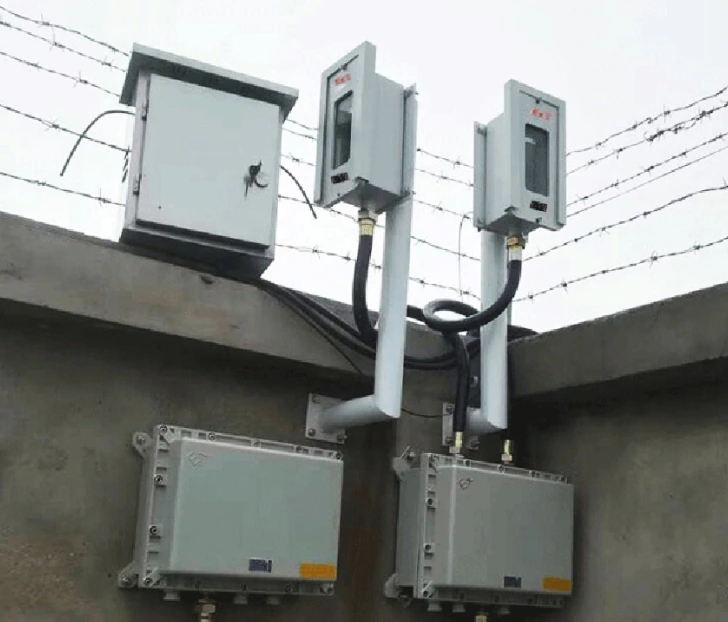
Explosion-proof perimeter alarm
Hazardous area · Ex d IIB T6 Gb / Ex ib IIC T6 detector family
Detection and alarm inside the hazardous area, not at its edge.
Specify this system for your perimeter
Send the perimeter length, fence or wall type and the response requirement. We will return a zone plan and a configuration.