
Distributed temperature fibre
Continuous temperature along the cable, not at a few points.
- Series / models
- DTS processor, 1–8 channels
- Detection
- Distributed temperature along fibre
- Typical range
- 10 km per channel, 1–8 channels
- Control
- Dual network / relay
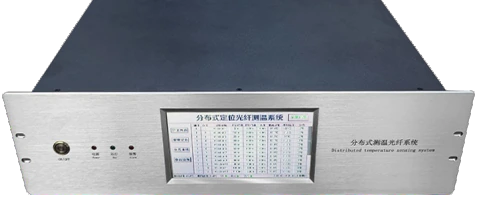
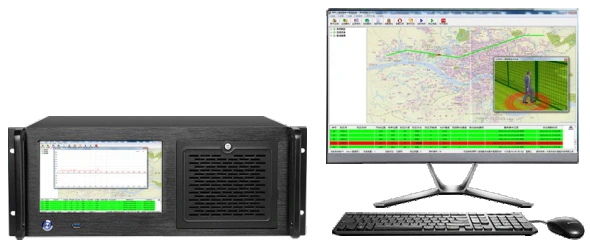
Distributed temperature fibre
| Channels | 1–8 |
|---|---|
| Range | 10 km each |
| Accuracy | 0.5 °C |
| Alarm modes | High / low / rate-of-rise |
Continuous temperature along the cable, not at a few points.
Continuous profile
The processor measures temperature along the entire fibre, so a hot joint or a smouldering cable is located rather than averaged away.
Three alarm modes
High-temperature, low-temperature and rate-of-rise alarms can be set independently for each channel.
Eight channels
One processor can monitor up to eight separate routes, such as cable trays, tunnels or conveyor lines.
Dual network ports
Dual network ports allow the processor to sit on a monitoring VLAN while reporting to the plant network.
0.1 °C resolution
A 0.1 °C resolution and 0.5 °C accuracy make slow trends visible before they become alarms.
From principle to site
Values are typical manufacturer data. Site conditions, power supply and configuration can change the final specification.
What DTS does and does not detect
Distributed temperature sensing measures heat, not motion. It is the right layer for cable trays, conveyor belts, tunnel ceilings, tank farms and transformer yards, where the risk is overheating, smouldering or a fire spreading along a route. It will not tell you that someone climbed a fence unless the climb produces heat.
In a perimeter project, DTS is usually a second layer: vibration fibre detects the intrusion, DTS monitors the cable or conveyor that runs beside the perimeter. Combining both on one platform gives the operator a motion alarm and a heat alarm with different response procedures.
Installing the sensing fibre
The fibre must be in contact with the surface being monitored. On cable trays, lay it along the cable bundle and fix it at regular intervals; on conveyor frames, protect it from mechanical wear. A fibre suspended in air measures the air temperature, not the asset.
Record the distance offset of each channel and the position of every splice. The processor reports temperature against distance, so a 5 m offset at the patch panel becomes a 5 m error in every alarm location. After commissioning, heat one point with a hot-air gun and confirm that the reported position matches the drawing.
Technical specifications
Values are typical manufacturer data. Site conditions, power supply and configuration can change the final specification.
| Channels | 1–8 |
|---|---|
| Distance per channel | 10 km |
| Temperature range | −40 °C to +80 °C; up to 300 °C with high-temperature fibre |
| Accuracy | 0.5 °C |
| Resolution | 0.1 °C |
| Measurement time | 1–30 s depending on channel count |
| Display | 7 in full-colour touch screen |
| Communication | Dual network ports |
| Fibre interface | FC/APC |
| Power supply | AC220 V |
| Consumption | 300 W |
| Operating environment | −40 °C to +60 °C; RH ≤ 90% |
| Dimensions | 430 × 400 × 130 mm, rack mount |
| Alarm output | Dry-contact relay |
Where this system is usually specified
Power & water utilities
Unattended sites where the alarm must be true the first time.
View detailsElectric fence for warehouses & factories
Long perimeters, vehicle yards and the places a fence quietly stops working.
View detailsOil, gas & hazardous areas
Detection that is certified for the zone it stands in.
View detailsBuyer questions
Can DTS replace a perimeter intrusion sensor?
No. DTS measures temperature along a fibre; it does not detect a person climbing or cutting a fence. It complements intrusion detection where fire or overheating is also a risk, such as cable routes and fuel facilities.
How accurate is the temperature reading?
The published accuracy is 0.5 °C with 0.1 °C resolution over a −40 °C to +80 °C range. Accuracy depends on the fibre type, splice quality and calibration; treat the first metres after a connector as a lower-confidence zone.
What fibre can be used?
Use a multimode fibre compatible with the processor and the site temperature. Standard cable is suitable to +80 °C; above that, specify a high-temperature fibre rated to 300 °C. The connector type is FC/APC.
How many channels do I need?
Count the separate routes that must be distinguished, not the total cable length. Eight channels are useful when cable trays, tunnels and conveyor lines have different response procedures; a single route can use one channel.
Systems that work alongside it
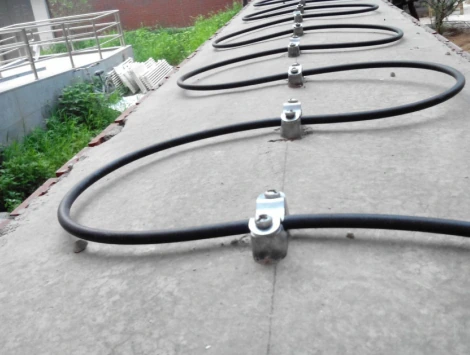
Vibration fibre
Covert detection · 1/2-zone collector · 4/8/16-channel chassis · locating unit
A sensing cable that hears climbing, cutting and digging along the whole run.
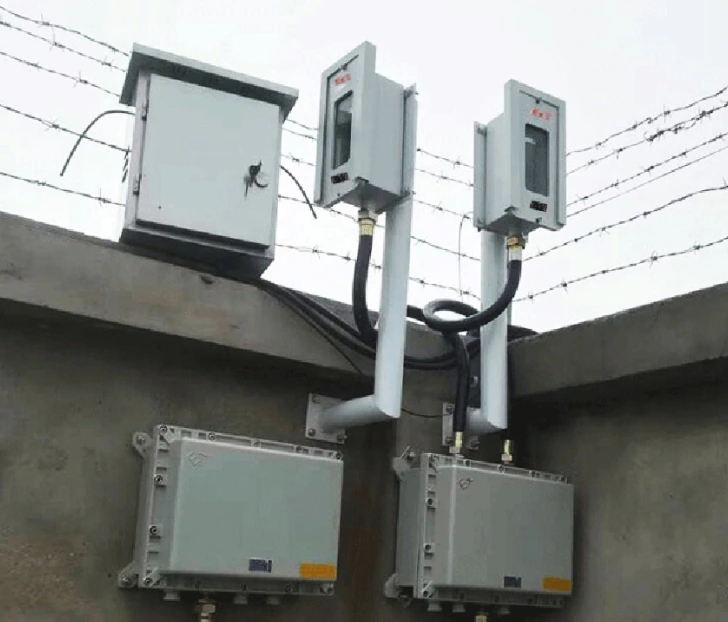
Explosion-proof perimeter alarm
Hazardous area · Ex d IIB T6 Gb / Ex ib IIC T6 detector family
Detection and alarm inside the hazardous area, not at its edge.
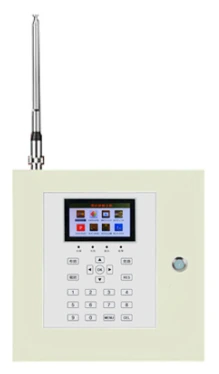
Electric fence alarm & control
Electric fence alarm · K7 / K9 / K10 hosts · touch terminal · management software
Arm, map and verify every electric fence zone from one interface.
Specify this system for your perimeter
Send the perimeter length, fence or wall type and the response requirement. We will return a zone plan and a configuration.