
Farms, ranches & orchards
Contain the herd, protect the crop, and keep the power bill at zero.
- Recommended layers
- 3
- Key risks
- 3
- Systems
- 3
Farm and ranch boundaries of 1–10 km use 2–4 wire livestock fence, 3–10 m post spacing, and P3–P6 energizers with 1.5–3 J output. A 12 V backup and solar panel keep the fence energized; gates and wet grass are the first fault points to check.
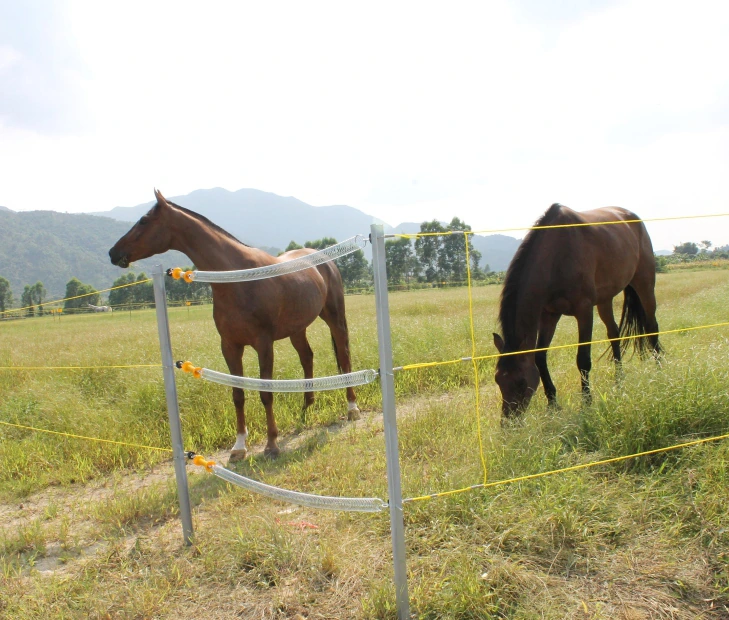
The site condition chooses the layer
Start with the places most likely to fail
Vegetation loads the fence
Grass touching the bottom wire leaks current and drops the voltage at the far end. A fence that worked in winter can fail in spring without anything breaking.
Distance from power
Pasture and orchard boundaries are often far from mains power. Trenching a power cable for hundreds of metres can cost more than the energizer itself.
Wildlife and theft
A livestock fence is designed to contain animals, not to stop a determined thief. If the site also stores equipment or fuel, add a separate intrusion layer at the shed and gate.
Layer by layer
Layer-by-layer configuration
Pasture — energizer and earth
Choose the energizer from the total wire length, then install three earth rods in damp soil. Keep the bottom wire clear and test the far-end voltage monthly.
Orchard — taller fence, more wires
For deer and wild boar, use a taller fence with more wires and a higher-energy unit. Bait or scent does not replace a properly earthed fence.
Remote gate — solar wireless
Where a gate or shed has no power, a solar infrared barrier with an NB-IoT host provides detection without trenching. Confirm cellular coverage at the mounting point first.
Systems used in this application
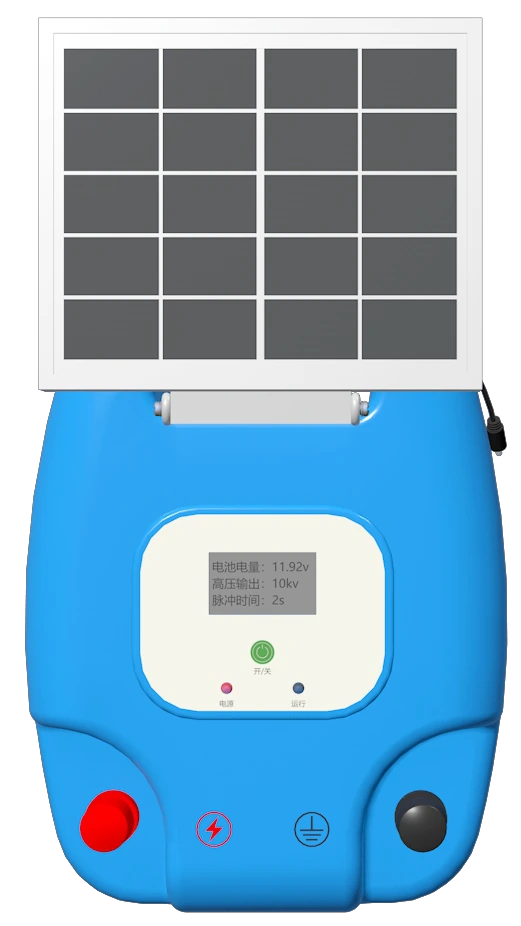
Livestock electric fence
Agricultural · P3 / P4 / P5 / P6 energizers + solar unit
A contained herd, a protected crop, and a fence that works without mains power.
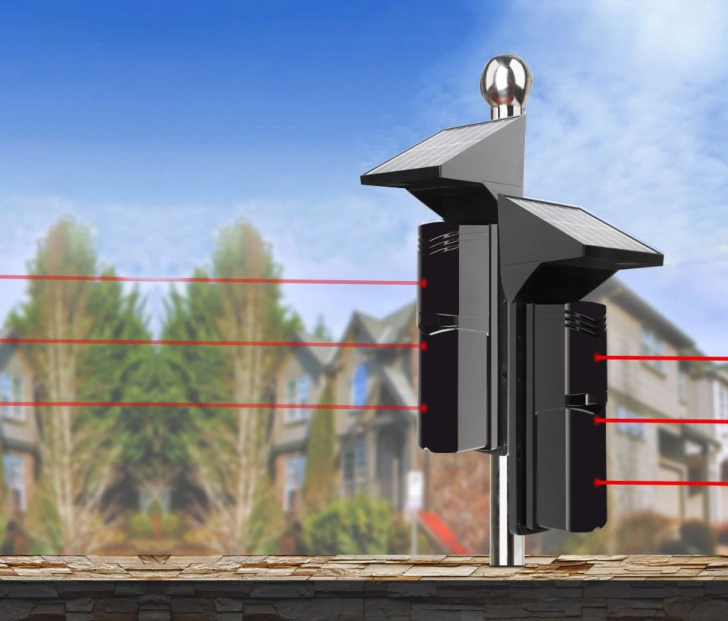
NB-IoT wireless alarm
Wireless · Solar infrared barrier + Y8 wireless host
A perimeter where trenching is impossible or the power is not there.
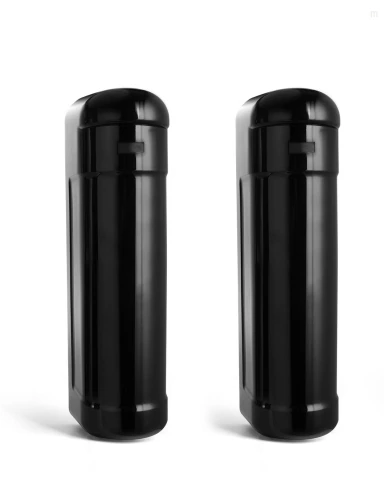
Infrared barrier
Beam detection · 2 / 3 / 4-beam active infrared
The economical beam layer for short and medium spans.
Application questions
How do I know the fence is working?
Use a voltage tester at the far end, not at the energizer. A reading near the energizer only proves the box is on; the far end proves the wire, insulators and earth are doing their job. Test monthly and after storms.
Can I use one energizer for several paddocks?
Yes, if the total wire length stays within the energizer’s reach and the paddocks are separated by switches or gates. Each additional wire and gate adds load; recalculate rather than adding paddocks indefinitely.
Will the shock hurt a horse?
A short pulse startles rather than injures, but horses can injure themselves reacting to a shock. Use visible tape, wider spacing, and keep the fence away from confined corners where an animal cannot escape the shock.
Plan this application
Send the site type, perimeter length and response model. We will propose a layered configuration.