Electric fence wire and insulators: choosing parts that hold
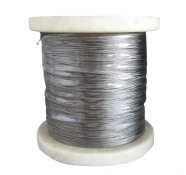
A 100 m wall-top run uses 4–6 alloy wires at φ0.66 mm × 7 strands, 8–12 insulators and terminal posts no more than 100 m apart; wire tension is set to 100–450 N. Alloy wire resists oxidation better than galvanised wire, and the insulator creepage distance decides whether the fence holds voltage in rain.
A pulse fence is often bought as a host, a wire count and a price. The host gets the display, but the parts that decide whether the fence is still stable after five summers are the electric fence wire, the insulators, the posts and the tension.
This guide treats wire and insulators as one mechanical system: what the wire has to do, where galvanised wire stops being a good idea, how insulators fail, what belongs in an electric fence kit for 100 m of wall-top fence, and which electric fence accessories are worth specifying.
What does one wire do in a pulse fence?
A pulse fence uses the wire for two jobs at once. It must carry a short pulse with stable resistance so the host can read the circuit at the far end, and it must hold a constant tension across posts spaced metres apart. A material that is excellent at one job can be poor at the other.
The standard part in this range is a magnesium-aluminium alloy wire, φ0.66 mm × 7 strands. The seven strands share the load, so one broken strand does not immediately drop the run, and the alloy resists oxidation better than plain steel. It is not the cheapest wire, and that is the point.
Alloy wire or galvanised wire?
Galvanised steel is strong and familiar, and on a farm fence it can last for years. On a pulse perimeter its higher resistance and its zinc coating change the electrical picture: the host sees a longer, lossier circuit, and the coating is the first thing to go at a scratched clamp or a bent wire.
Alloy wire is chosen where the fence must stay electrically predictable. It is not a commodity wire; it also avoids the maintenance pattern where a fence passes a voltage test in dry weather and fails after a week of rain.
| Criterion | Mg-Al alloy wire | Galvanised steel wire |
|---|---|---|
| Material | φ0.66 mm × 7-strand Mg-Al alloy | Galvanised low-carbon steel, single or multi-strand |
| Conductivity | Stable resistance along the run; low load on the pulse circuit | Higher resistance; rises further as the zinc layer ages |
| Oxidation | Thin, self-limiting oxide; resists corrosion at joints | Zinc protects until scratched, then rust starts at cuts and clamps |
| Tension | Holds design tension; springs absorb thermal movement | Higher tensile strength but stiffer; zinc cracks at tight bends |
| Best use | Pulse and tension perimeters, long zones, humid sites | Temporary livestock runs, short returns, low-cost divisions |
Why do electric fence insulators fail quietly?
An insulator has one job: keep the wire off the post while withstanding the pulse and the weather. The electric fence insulators in this range are ABS engineering plastic rated above 15 kV, fixed with stainless clips. That rating is the margin against tracking when the surface is wet and dusty.
Most insulator failures are mechanical first. UV makes the plastic brittle, a trimmer chips the skirt, and a clamp tightened on a sharp edge starts a crack. The fence may still alarm, but the pulse now has a path to the post, showing up as a weak far end or a zone that trips in wind.
How far apart should terminal posts be?
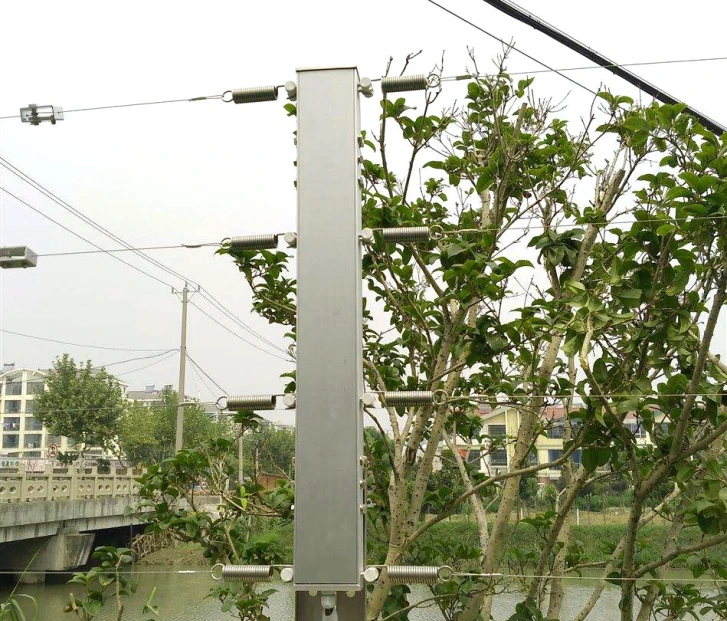
Terminal posts carry the tension at zone ends and corners. In this system the span between terminal posts is normally no more than 100 m; bearing posts sit every 20–25 m and intermediate posts every 4–5 m. Those numbers keep the wires parallel, limit sag and give the tensioner something to pull against.
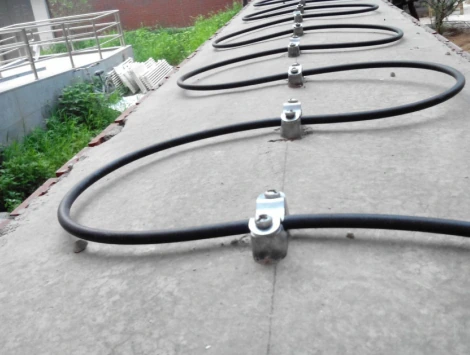
A wall-top run adds wind load. A post fixed to coping with a light bracket may look right on a calm day and move enough in a storm to change the tension reading. Use the wall only if it can take the load; otherwise set posts into the ground or a steel frame. The post is part of the sensor.
What belongs in an electric fence kit
A kit for 100 m of wall-top pulse fence should be built from the zone out, not from the host in. Start with six wires, because a six-wire run gives redundancy on an exposed wall; four wires are adequate on a low wall with a quiet boundary. Then count posts, insulators and tension hardware from the spacing rules.
The table below is a working bill of materials for one straight 100 m zone, assuming terminal posts at both ends, bearing posts at 25 m and intermediate posts at 5 m. Adjust the counts for corners, gates and wall height; do not adjust the logic.
| Item | Typical spec | Quantity for 100 m | Why it matters |
|---|---|---|---|
| Mg-Al alloy wire | φ0.66 mm × 7 strands | ≈660 m (6 × 100 m + 10%) | Conductor and tension member; one wire type avoids mixed joints |
| Terminal posts | Φ32 × 2.0 × 850 mm aluminium alloy tube | 2, plus one per corner or gate | Takes the pull at zone ends and sets the 100 m limit |
| Bearing posts | Φ21.5 mm alloy or galvanised pipe | 3–4 at 25 m centres | Carries long spans and keeps wire height even |
| Intermediate posts | Matched to the insulator clip | 20–24 at 4–5 m centres | Holds spacing and limits sag and wind movement |
| Insulators | >15 kV ABS, stainless clip | 150–200 (6 per post + spares) | Keeps the pulse off the post; quick to replace |
| Tensioners and springs | Alloy tensioner, stainless spring | 6 of each | Equalises tension and absorbs thermal movement |
| High-voltage lead | Double-insulated, oxidation-resistant | 10–30 m by routing | Carries the pulse from host to fence without leakage |
| Warning signs | Printed plate, visible both sides | 11 at 10 m centres | Warns before contact and marks the live line |
| Earth kit | 1–2 arresters, 6–16 mm² copper, electrode | 1 set per zone | Gives the pulse a return path; target below 10 Ω |
| Fixings | SUS304 stainless | 1 box plus wall anchors | Corrosion at a clamp is where a good wire starts to fail |
Which electric fence accessories are worth specifying?
Tensioners, springs and turnbuckles are not decoration. They let the installer set equal tension on every wire and leave room for thermal movement, so the fence does not tighten in summer and sag in winter. A stainless spring saves a second visit to re-tension.
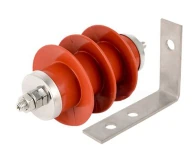
Lightning protection is the other item that is easy to delete. One or two high-voltage arresters per zone, bonded to a dedicated electrode with 6–16 mm² copper and measured below 10 Ω, protect the host from the surge that arrives along the wire. If the arrester is missing, the host becomes the arrester. Use IP-rated glands at enclosure entries and keep high-voltage and communication conduits separate.
Does mixing metals cause corrosion?
Use one wire type and one insulator type across the site. Mixing aluminium alloy with galvanised clamps or bare copper creates a galvanic couple at the joint, and the joint is where the pulse needs a clean connection. Stainless fasteners reduce the problem but do not cancel a bad material pair.
On coastal or industrial sites, inspect the first 50 m after the rainy season for white powder, cracked skirts and loose clamps. Replace a damaged wire section rather than twisting it back together; a twisted joint has different resistance and moves with the wind.
Which commissioning checks prove the parts?
Before handover, measure tension on each wire, confirm the 30 mm clearance to other metal, and inspect every insulator for cracks and UV chalking. Test the pulse at the far end of the zone, not only at the host; a fence that reads correctly at the terminals can still be weak at the last post.
Record the earth resistance, tension values and far-end test result with the date. Keep a small spares box: ten insulators, two tensioners, a coil of alloy wire and stainless clips. The parts that hold are the ones that can be replaced without ordering a drum.