
Livestock electric fence
A contained herd, a protected crop, and a fence that works without mains power.
- Series / models
- P3 / P4 / P5 / P6 energizers + solar unit
- Detection
- Electric pulse deterrent / containment
- Typical range
- 1–10 km single wire depending on model
- Control
- Local control; P6 alarm relay
Livestock electric fence
| Output | 8–12 kV |
|---|---|
| Energy | 1.5–3 J |
| Reach | 1–10 km |
| Power | Mains or solar |
A contained herd, a protected crop, and a fence that works without mains power.
High-voltage, low-energy pulse
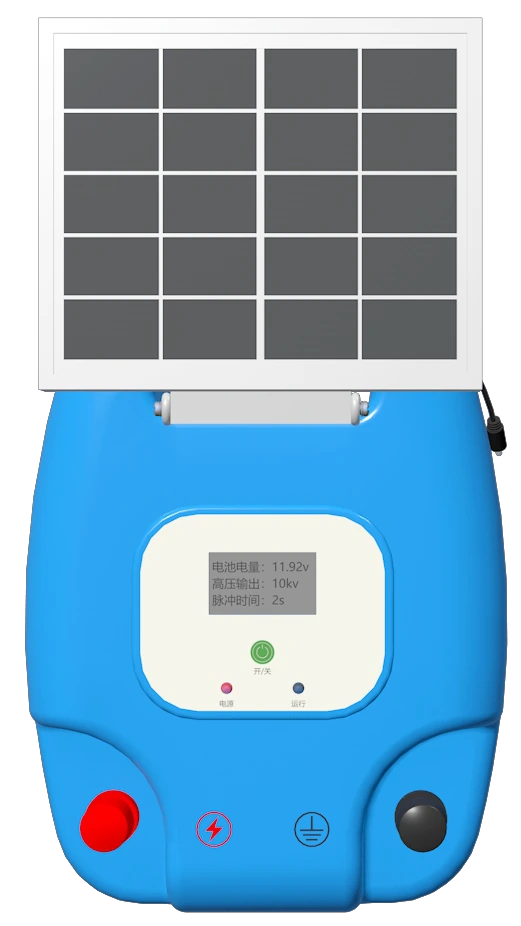
The energizer delivers a short pulse at 8–12 kV; the energy per pulse (1.5–3 J) is what makes the shock memorable without being dangerous.
Solar and battery
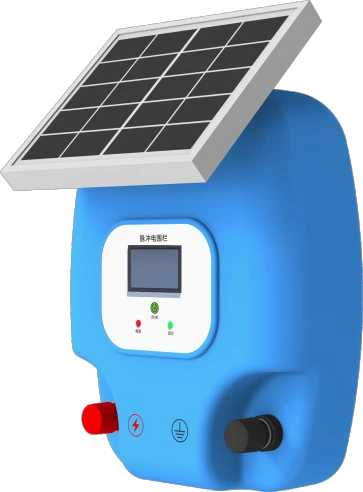
The solar model includes a lithium battery and a 290 × 240 mm or 210 × 190 mm panel, with a charging rate of 0.44 A/hour in good light.
Long single-wire runs
P5 and P6 reach 3–10 km of single wire; P3 and P4 cover 1–3 km for smaller paddocks and orchards.
IP65 outdoor housing
The energizer is sealed to IP65 and operates from −20 °C to +50 °C, with the terminals protected from rain.
Voltage and energy choices
P6 offers 8, 10 or 12 kV output and a 1 s or 1.5 s discharge interval, so the fence can be matched to animal size and vegetation load.
From principle to site
Values are typical manufacturer data. Site conditions, power supply and configuration can change the final specification.
Sizing an energizer for the paddock
Start with the length of wire, not the area. A 3 J energizer driving 10 km of wire has far less voltage at the far end than the same energizer driving 2 km, because vegetation, insulators and soil leakage load the circuit. Add the length of every wire in a multi-wire fence; a five-wire 2 km fence is a 10 km load.
Use the published reach as a maximum under clean conditions, then derate for dry soil, heavy grass and poor insulators. For a permanent boundary, choose one step above the calculated load; for rotational grazing, a smaller energizer moved with the herd is often more practical.
Earthing and vegetation management
The energizer’s earth is half the circuit. Drive at least three earth rods in damp soil, spaced several metres apart, and connect them to the energizer with a corrosion-resistant conductor. A poor earth makes the fence painful at the terminal but weak at the far end.
Keep grass off the bottom wire. Vegetation touching the wire leaks current to earth, drops the voltage and can hide a real break. Mow or spray a strip under the fence, and use a voltage tester at the far end monthly rather than waiting for animals to test it.
Technical specifications
Values are typical manufacturer data. Site conditions, power supply and configuration can change the final specification.
| Models | P3 (no display) / P4 (display) / P5 / P6 / solar unit |
|---|---|
| Output voltage | P3/P4/P5 < 12 kV; P6 8/10/12 kV |
| Energy per pulse | P3/P4/P6 1.5 J; P5 3 J |
| Single-wire reach | P3/P4 1–3 km; P5/P6 3–10 km |
| Pulse width | 100 µs |
| Discharge interval | 1.0 s; P6 1.0 or 1.5 s |
| Power supply | DC12 V 2 A; solar model internal lithium battery |
| Consumption | ≤ 5–7 W mains; ≤ 2 W solar |
| Alarm (P6) | Open-circuit alarm; relay 2 A 12 V DC / 2 A 120 V AC |
| Operating temperature | −40 °C to +50 °C (mains); −20 °C to +50 °C (solar) |
| Protection | IP65 (solar); outdoor housing for mains models |
| Dimensions | P3/P4 110 × 180 × 55 mm; P5/P6 180 × 200 × 80 mm; solar 210 × 260 × 90 mm |
Where this system is usually specified
Buyer questions
Is the pulse dangerous to animals or people?
A livestock energizer is designed to deliver a short, high-voltage, low-energy pulse that startles rather than injures. It is still painful and must be treated as live equipment: post warning signs, keep the energizer out of reach of children, and disconnect before working on the fence.
How many wires and what spacing?
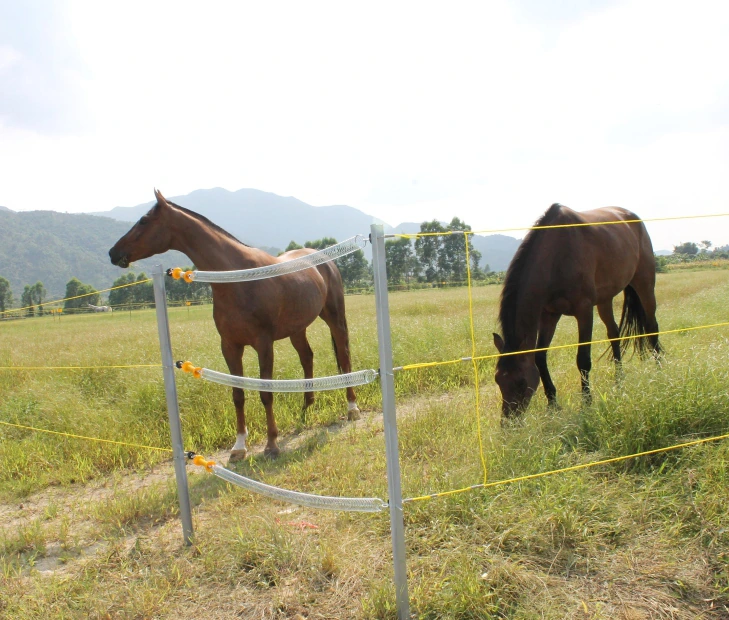
For cattle, three to five wires with the lowest at about 45–60 cm; for sheep, five to seven wires closer together; for horses, use visible tape and wider spacing to reduce injury risk. The exact layout depends on animal size and whether the fence is permanent or temporary.
Will the solar model work through a cloudy week?
The panel charges at 0.44 A/hour in good light, and the internal lithium battery carries the energizer between charges. Sizing depends on the load and the local winter sun; for a critical boundary, add a second panel or a larger battery rather than relying on the brochure number.
Can it be used to keep wildlife out of an orchard?
Yes. The catalog describes pasture, orchard and crop protection as typical uses. For deer and wild boar, use a taller fence with more wires and a higher energy unit, and keep the bottom wire clear of grass so the voltage stays high.
Systems that work alongside it
Electric fence energizer system
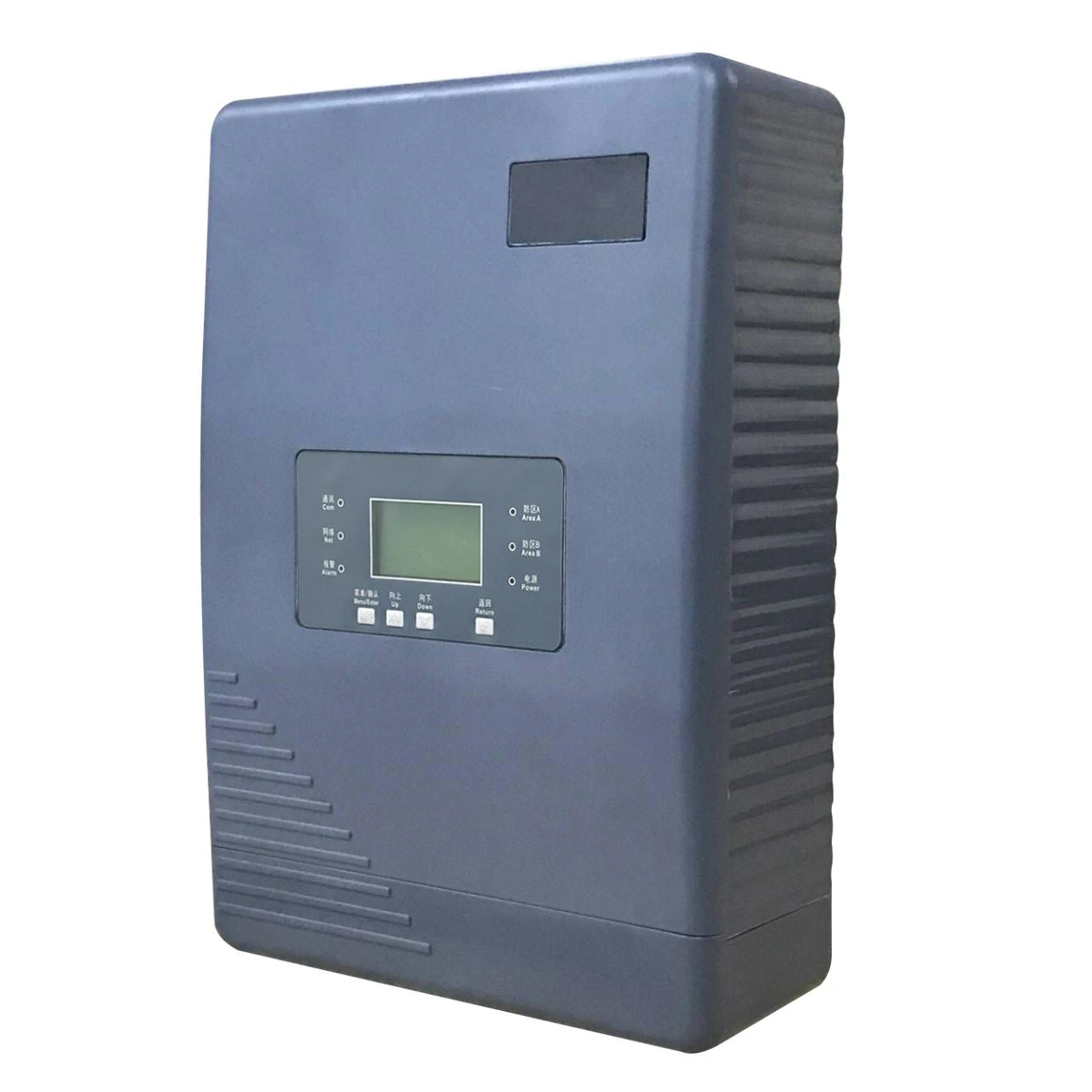
Fence detection · X3 / X5 / X6 series
5,000–10,000 V bi-polar pulse, one pulse per second, ≤2.5 J.
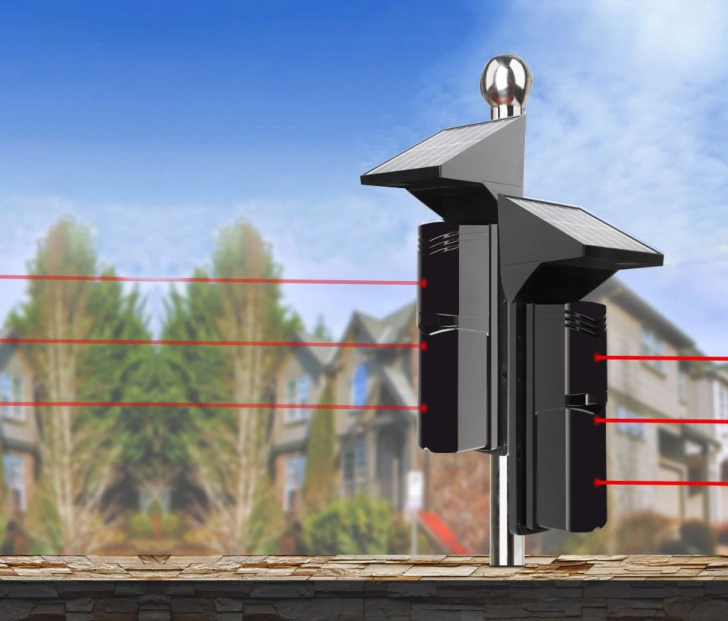
NB-IoT wireless alarm
Wireless · Solar infrared barrier + Y8 wireless host
A perimeter where trenching is impossible or the power is not there.
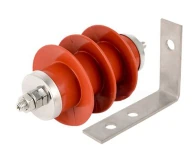
Electric fence wire & accessories
Electric fence accessories · Posts, insulators, alloy wire, tensioners, grounding
Electric fence wire, insulators and tensioners — the parts that decide year five.
Specify this system for your perimeter
Send the perimeter length, fence or wall type and the response requirement. We will return a zone plan and a configuration.