
Power & water utilities
Unattended sites where the alarm must be true the first time.
- Recommended layers
- 3
- Key risks
- 3
- Systems
- 3
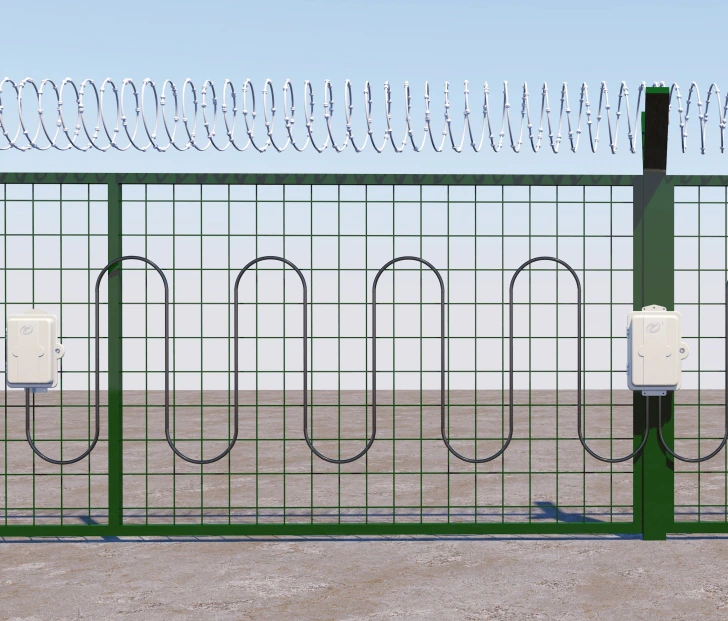
A 200–600 m substation perimeter uses 4–6 wire pulse fence in 80–110 m zones, laser barriers across 180 m open edges, and DTS on cable trenches at 10 km per channel. Verification is by camera preset and local sounder; earth resistance is kept below 10 Ω.
The site condition chooses the layer
Start with the places most likely to fail
Remote response
Many sites have no permanent guard. The alarm must reach a control room with enough detail to send the right person, and the local sounder must be enough to move an intruder along.
Electrical noise and earthing
Switchyards, transformers and cable trays produce strong fields. Fibre is immune; copper sensors need shielded cable, separation from power routes and a clean earth.
Vegetation and access roads
Utility sites often have wide grass strips and service roads inside the fence. A beam across a service road alarms on every maintenance visit; the detection line should follow the actual asset boundary.
Layer by layer
Layer-by-layer configuration
Fence layer — pulse or tension
A four- or six-wire pulse fence on the perimeter wall, or tension where the site prefers no voltage. Zones align with the switchyard bays so an alarm points to a bay, not a whole side.
Open areas — laser barriers
Laser barriers cover the long, straight sections between buildings and the open switchyard edge. Multi-beam columns reduce the chance of stepping over or crawling under.
Cable routes — DTS or vibration fibre
Distributed temperature fibre monitors cable trays for overheating; vibration fibre detects digging or cutting along the route. Both report to the same control layer as the perimeter.
Systems used in this application
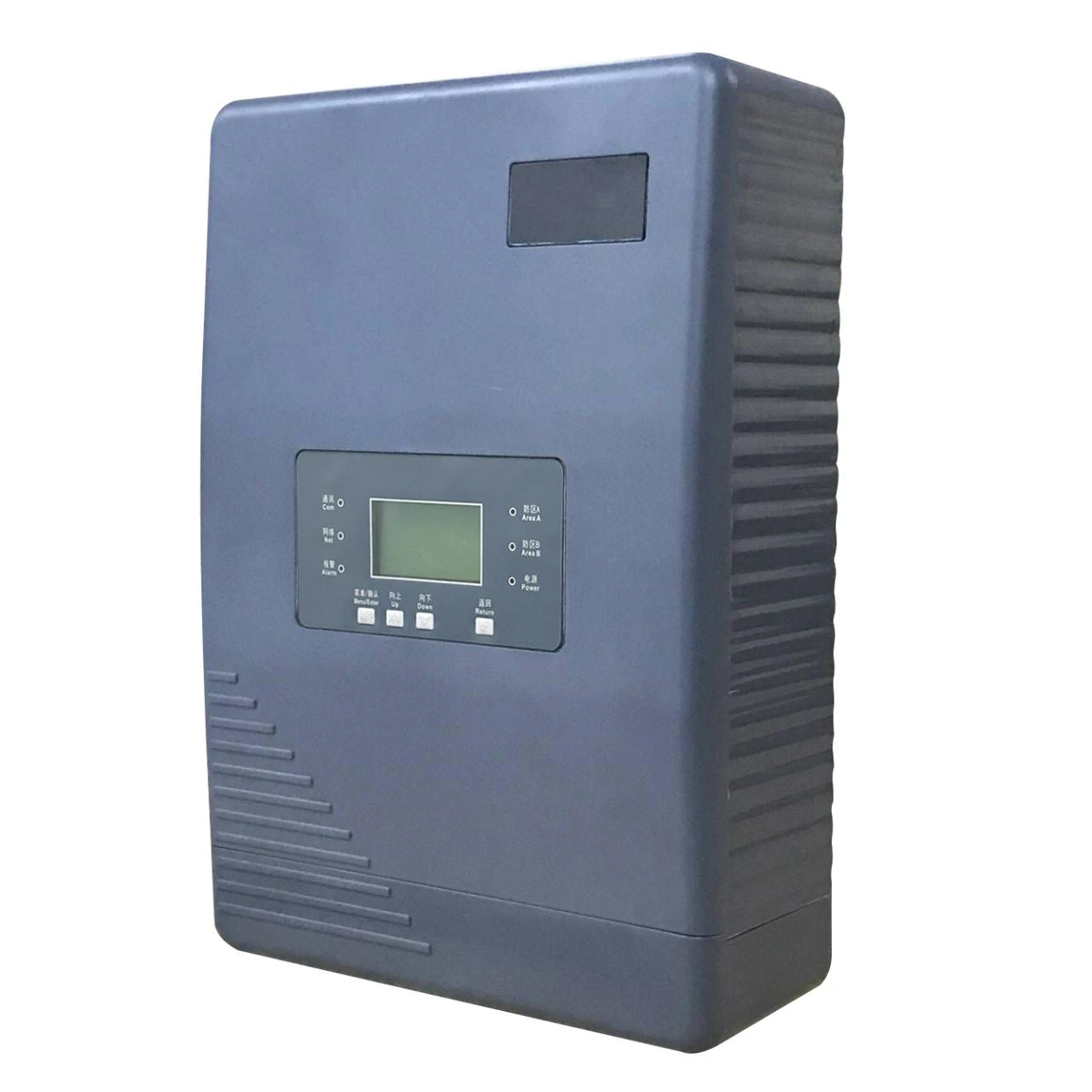
Electric fence energizer system
Fence detection · X3 / X5 / X6 series
5,000–10,000 V bi-polar pulse, one pulse per second, ≤2.5 J.
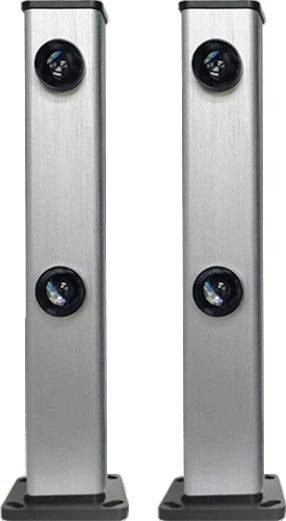
Laser barrier
Beam detection · 1–8 beam laser detectors
A narrow beam that holds its line for hundreds of metres.
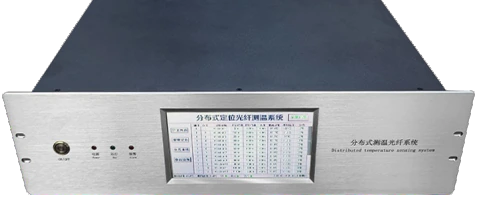
Distributed temperature fibre
Covert detection · DTS processor, 1–8 channels
Continuous temperature along the cable, not at a few points.
Application questions
Can the system report to a remote control room?
Yes, through the K10 host (RS485/network/GPRS), the management platform, or a site gateway. Confirm the protocol and the network path with the operations team; a local alarm that never reaches the control room is not a remote monitoring system.
Will a pulse fence interfere with the electrical equipment?
The fence is designed for perimeter use and the pulse is short, but keep the high-voltage lead away from instrument cables and follow the site’s EMC separation rules. On sites with sensitive instrumentation, tension or fibre removes the question entirely.
What happens during a scheduled outage?
The host’s 12 V backup battery keeps the fence armed, but the duration depends on battery capacity. For a long outage, either size the battery for the planned window or accept that the site is on local alarm only. Test the changeover before the outage, not during it.
Plan this application
Send the site type, perimeter length and response model. We will propose a layered configuration.