
Buried leakage cable
A detection line you cannot see, following the ground you already have.
- Series / models
- Leakage cable detector set
- Detection
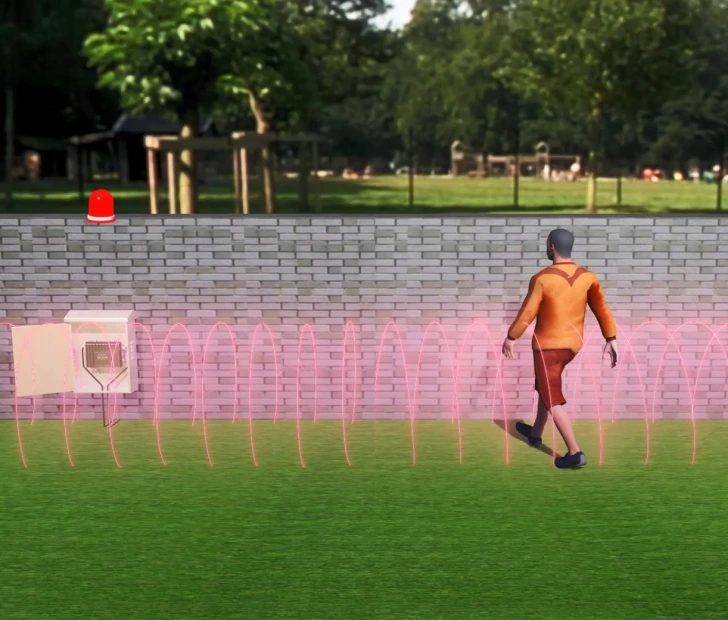
- Buried leakage cable electromagnetic field
- Typical range
- ≤ 100 m per detector set
- Control
- RJ45 network / dry contacts
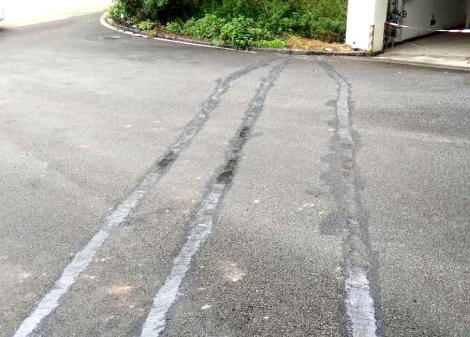
Buried leakage cable
| Coverage | ≤ 100 m |
|---|---|
| Depth | 3–10 cm |
| Spacing | 0.3–1.5 m |
| Output | RJ45 + relay |
A detection line you cannot see, following the ground you already have.
No visible fence
The detection field is created by two buried cables, so the perimeter does not advertise where the sensor is or how it works.
Follows the terrain
Cable routes can bend around trees, culverts and level changes that would break a straight fence line.
Pet immunity
The detection field is shaped for human intrusion; small animals moving across the route are filtered by the detector.
Network output
The detector provides an RJ45 network port and dry-contact alarm output for a control host or management platform.
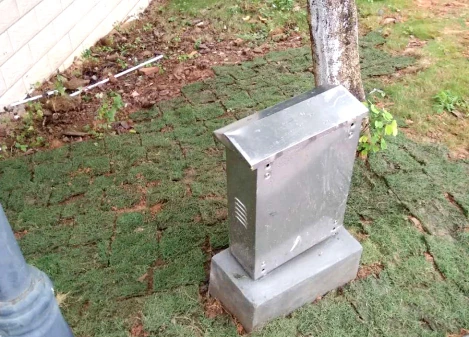
Cast aluminium housing
The detector is housed in a cast aluminium enclosure rated for outdoor use, with a 3-inch display for setup.
From principle to site
Values are typical manufacturer data. Site conditions, power supply and configuration can change the final specification.
What the buried field sees
Two parallel leakage cables create an electromagnetic field just above the ground. A person crossing the line disturbs the field; the detector compares the disturbance against its background model and raises an alarm. Because the field is shaped above the cables, it responds to a walking or crawling person but ignores most small animal movement.
The route can run along the base of a wall, through a flower bed or across an open verge. This makes it useful where a fence would be visually unacceptable, where the boundary is irregular, or where a second, covert layer is needed behind a visible fence.
Trenching and commissioning
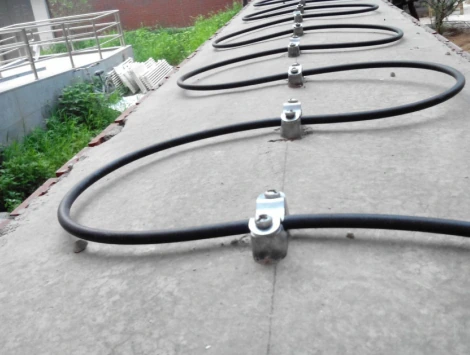
Keep the two cables parallel at the specified spacing; a change in spacing changes the field. Mark the route on the as-built drawing and place a warning tape above the cables so later landscape work does not cut them. Backfill without stones that could deform the cable.
Commission with a walk test at the start, middle and end of the route, plus a crawl test. Record the gain and threshold for each segment. If the site has a known animal route, test it after dark as well; the background at night can differ from the daytime commissioning condition.
Technical specifications
Values are typical manufacturer data. Site conditions, power supply and configuration can change the final specification.
| Detection principle | Buried leakage cable field |
|---|---|
| Coverage | ≤ 100 m per set |
| Cable spacing | 0.3–1.5 m (1 m recommended) |
| Burial depth | 3–10 cm |
| Display | 3.0 in |
| Communication | RJ45 network (standard) |
| Power supply | DC18 V |
| Consumption | ≤ 5 W |
| Alarm output | Dry NO/NC contact |
| Operating temperature | −40 °C to +50 °C |
| Housing | Cast aluminium |
Where this system is usually specified
Airports & borders
Kilometres of boundary, one map, and a response that can find the point.
View detailsPower & water utilities
Unattended sites where the alarm must be true the first time.
View detailsElectric fence for prisons & correctional facilities
Layers that assume the first one will be tested.
View detailsElectric fence for homes & villas
A perimeter that a resident can live beside and a guard can actually reach.
View detailsBuyer questions
Can the cable be installed under paving or concrete?
It can cross paved areas in a conduit or a saw-cut slot, but the detection field is affected by the covering material and the depth. Keep the specified 3–10 cm depth and test the crossing after installation; a thick reinforced slab may reduce sensitivity.
How wide is the detection zone?
The field is narrow and follows the cable pair; it is not a wide-area sensor. A person must cross the cable line to be detected, so the route must sit where an intruder would actually walk, not in a decorative strip that can be stepped over.
What happens if the cable is cut?
A cut changes the loop and is reported as a fault or alarm, depending on the detector setting. The route should be marked and protected by landscape rules; a spare cable pair left in the trench simplifies repair.
Does standing water affect it?
A permanently saturated or flooded route changes the background and can cause drift. Drain the trench, avoid low points that collect water, and re-commission after a heavy rain if the site is prone to flooding.
Systems that work alongside it
Vibration fibre
Covert detection · 1/2-zone collector · 4/8/16-channel chassis · locating unit
A sensing cable that hears climbing, cutting and digging along the whole run.
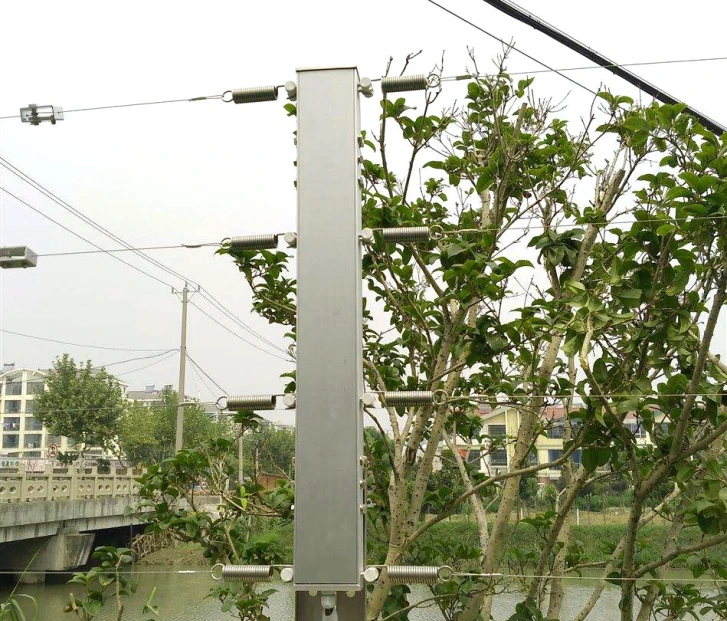
Tension fence
Fence detection · S7W / S9 / X800 / X900
Detects climbing, cutting and slackening without voltage on the fence.
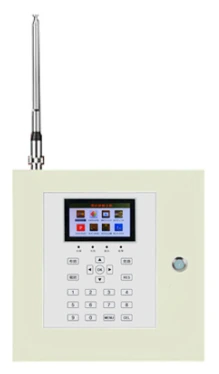
Electric fence alarm & control
Electric fence alarm · K7 / K9 / K10 hosts · touch terminal · management software
Arm, map and verify every electric fence zone from one interface.
Specify this system for your perimeter
Send the perimeter length, fence or wall type and the response requirement. We will return a zone plan and a configuration.