
Infrared barrier
The economical beam layer for short and medium spans.
- Series / models
- 2 / 3 / 4-beam active infrared
- Detection
- Active infrared beam interruption
- Typical range
- 30–250 m
- Control
- Relay / alarm panel
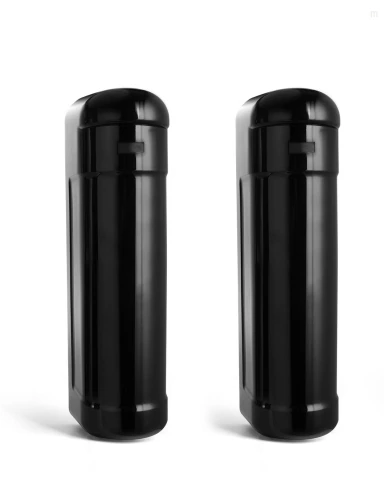
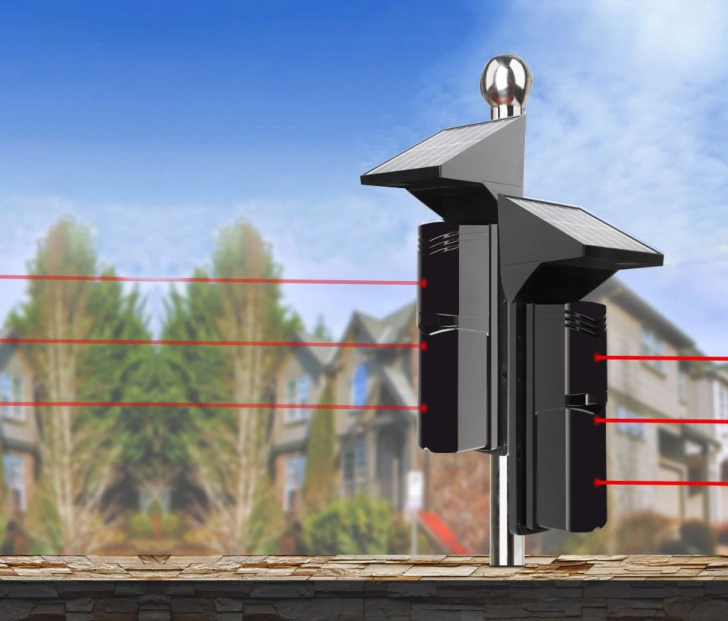
Infrared barrier
| Range | 30–250 m |
|---|---|
| Beams | 2–4 |
| Response | 50–700 ms |
| Rating | IP65 |
The economical beam layer for short and medium spans.
Active infrared beams
The transmitter sends a modulated infrared beam to the receiver; a person crossing the line interrupts it and the relay changes state.
Two to four beams
Multiple beams reduce the chance that a bird, leaf or small animal triggers the barrier, and make crawling detection more reliable.
Wide alignment range
Horizontal 180° and vertical ±15° adjustment simplify alignment on walls, gates and uneven ground.
Anti-tamper output
A separate tamper contact reports removal of the cover, which prevents a silent disable of the beam.
Wide voltage input
The barrier accepts DC12–24 V or AC10–18 V, which suits both new installations and existing alarm panels.
From principle to site
Values are typical manufacturer data. Site conditions, power supply and configuration can change the final specification.
Where infrared is the sensible choice
Infrared barriers cost less than laser and are easier to align, which makes them suitable for gates, short walls, roof edges and the gaps between buildings. They are also the usual choice for residential and campus perimeters where the threat is a casual intruder rather than a prepared one.
The limitation is range and weather margin. At 200–250 m, the beam is wide and the receiver works harder; fog, dust and direct sunlight reduce the margin further. For a critical long boundary, use laser or fibre as the primary layer and infrared for the short returns.
Reducing nuisance alarms
Mount the barrier above the height of grass and shrubs, clear vegetation from the line of sight, and avoid aiming into a low sun. Use two or more beams so a single leaf cannot break the circuit, and set the response time long enough to ignore a bird but short enough to catch a runner.
On gates, mount the barrier on the fixed post, not on the moving leaf. A gate that flexes will misalign the beam and produce alarms every time it closes. Use a separate gate contact for the opening itself.
Technical specifications
Values are typical manufacturer data. Site conditions, power supply and configuration can change the final specification.
| Beams | 2, 3 or 4 |
|---|---|
| Range | 30 / 50 / 60 / 100 / 150 / 200 / 250 m (model dependent) |
| Detection mode | Simultaneous beam interruption |
| Response time | 50–700 ms |
| Light source | LED infrared |
| Alarm output | Relay dry contact, NO/NC, 30 V 0.5 A |
| Power supply | DC12–24 V or AC10–18 V |
| Operating temperature | −20 °C to +55 °C |
| Humidity | ≤ 95% RH, non-condensing |
| Protection | IP65 |
| Material | ABS, PC, PMMA |
| Alignment | Horizontal 180°; vertical ±15° |
| Tamper output | Dry contact |
Where this system is usually specified
Electric fence for homes & villas
A perimeter that a resident can live beside and a guard can actually reach.
View detailsElectric fence for schools & campuses
A boundary that protects without looking like a prison.
View detailsElectric fence for warehouses & factories
Long perimeters, vehicle yards and the places a fence quietly stops working.
View detailsFarms, ranches & orchards
Contain the herd, protect the crop, and keep the power bill at zero.
View detailsBuyer questions
Will sunlight trigger the barrier?
The receiver uses a modulated infrared signal and filters steady sunlight, but aiming directly into a low sun can still saturate it. Avoid east-west alignment where the receiver faces sunrise or sunset, or fit a sunshade.
Can animals trigger it?
A single low beam will react to a large dog or a person crawling. Two or more beams mounted above 60 cm reduce ground-level false alarms, but they do not replace a dedicated pet-immune detector for a site with many animals.
What is the maximum distance between posts?
It depends on the model: 30–250 m. Do not use the maximum figure on a site with fog, dust or ground movement; leave at least 20–30% margin and align at the actual installation temperature.
Can it be battery or solar powered?
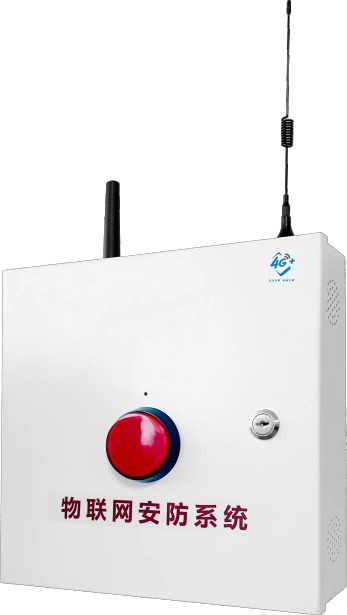
The standard barrier is wired. For sites without power, use the solar wireless infrared barrier and NB-IoT host, which combine a solar panel, battery and wireless backhaul in one set.
Systems that work alongside it
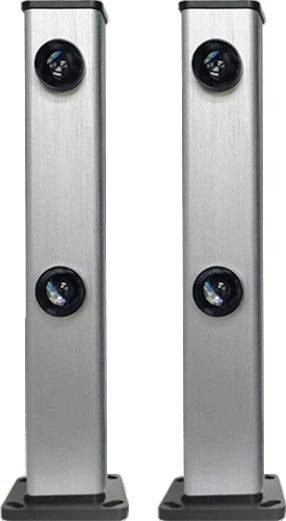
Laser barrier
Beam detection · 1–8 beam laser detectors
A narrow beam that holds its line for hundreds of metres.
NB-IoT wireless alarm
Wireless · Solar infrared barrier + Y8 wireless host
A perimeter where trenching is impossible or the power is not there.
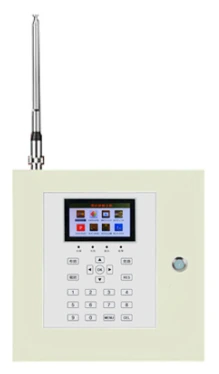
Electric fence alarm & control
Electric fence alarm · K7 / K9 / K10 hosts · touch terminal · management software
Arm, map and verify every electric fence zone from one interface.
Specify this system for your perimeter
Send the perimeter length, fence or wall type and the response requirement. We will return a zone plan and a configuration.