
Substation, 480 m perimeter
A 480 m unmanned 110 kV substation with a walled compound, an open switchyard edge and a cable trench. The reference design uses 5 pulse zones, 2 four-beam laser columns, one DTS channel, a three-week installation window and a target of under one false alarm per zone per month.
- Perimeter
- 480 m wall + open switchyard edge
- Layers
- Pulse fence + laser + DTS
- Control
- K10 host, remote reporting
Site condition and constraints
| Perimeter | 480 m wall + open switchyard edge |
|---|---|
| Layers | Pulse fence + laser + DTS |
| Control | K10 host, remote reporting |
The compound is unmanned outside maintenance visits. Power is available at the gatehouse, but the switchyard edge has no convenient supply. The operator wants alarms at a regional control room and a local sounder to move an intruder along.
The site has strong electrical fields near the switchyard and a cable trench that carries control and power cables. Copper sensors need separation; fibre is immune.
Layers and zones
Wall — short pulse zones
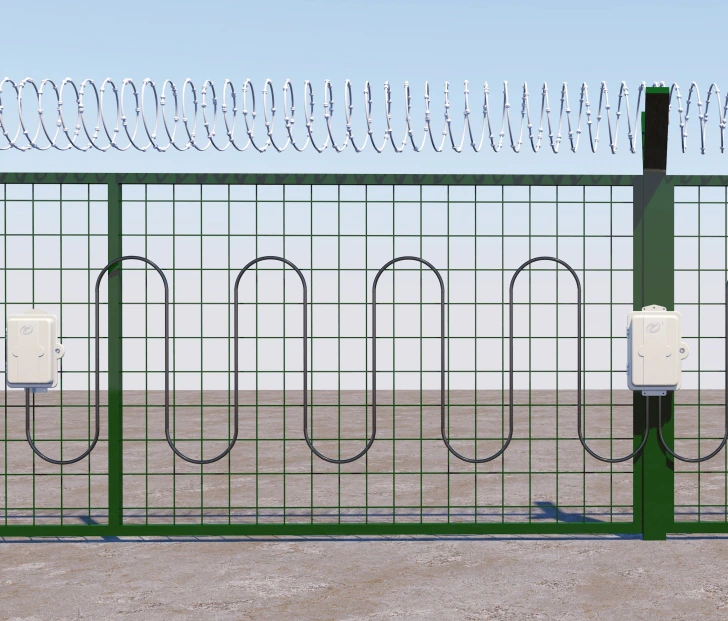
Four-wire pulse fence on the 480 m wall, divided into five zones of 80–110 m. Each zone aligns with a camera preset and a switchyard bay name.
Open edge — laser columns
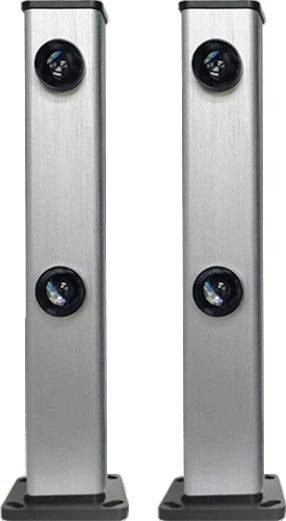
Two four-beam laser columns cover the 180 m open edge, with the response time set to 100 ms. The beams sit above the grass and below the camera line, avoiding the maintenance road.
Cable trench — temperature fibre
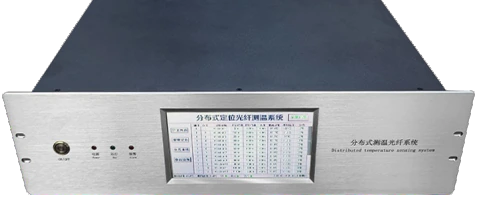
A single-channel DTS processor monitors the cable trench for overheating, with high-temperature and rate-of-rise alarms. It shares the control room map with the perimeter zones but has a separate response procedure.
What the configuration achieves
- Perimeter alarms and cable overheating appear on one map but remain separate alarm classes.
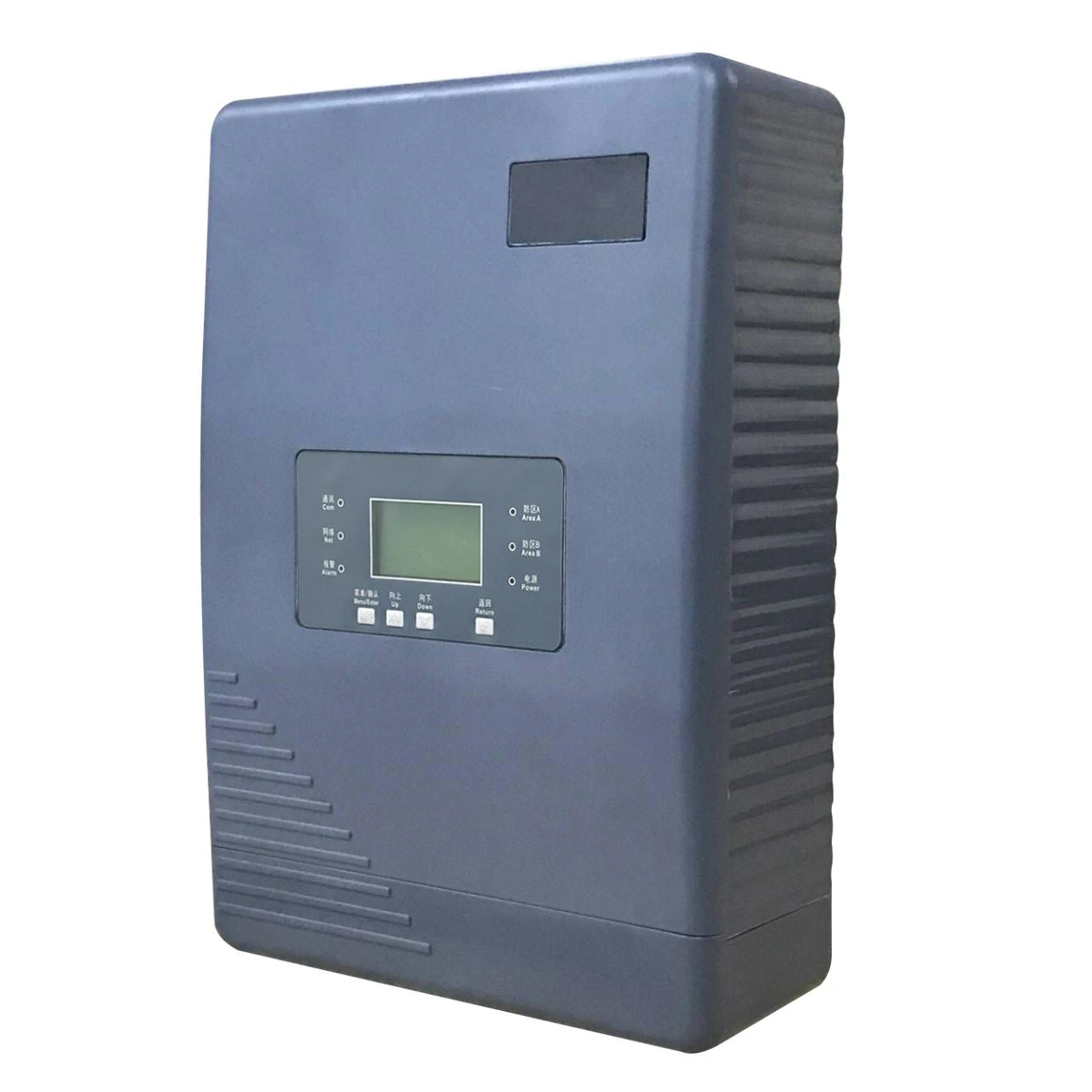
- The K10 host reports to the regional control room over network/GPRS; the local sounder covers the gate area.
- Fibre on the switchyard edge removes powered nodes from the high-field area.
What to watch during installation
- Do not run the pulse high-voltage lead parallel to instrument cables; keep the separation distance from the site EMC drawing.
- Set the laser response time for a running person, not a crawling one, on an open switchyard edge.
- Test the remote reporting path before the site is left unmanned; a local siren alone is not remote monitoring.
Systems in this configuration
Electric fence energizer system
Fence detection · X3 / X5 / X6 series
5,000–10,000 V bi-polar pulse, one pulse per second, ≤2.5 J.
Laser barrier
Beam detection · 1–8 beam laser detectors
A narrow beam that holds its line for hundreds of metres.
Distributed temperature fibre
Covert detection · DTS processor, 1–8 channels
Continuous temperature along the cable, not at a few points.
Adapt this pattern to your site
Tell us where it differs — length, wall type, soil, power or response model — and we will adjust the layers.